Seikos shrouded diver line started way back in in 1975 with the introduction of the Seiko 6159-7010 Professional. This watch came into being due to Seiko seeking to find a solution to the complaints from professional divers about watch failures at depth. Although the Japanese are famous for taking a design and applying their interpretation to it, the shrouded diver owed nothing to anyone, it was a truly unique design. It included several industry firsts, the first titanium case, the L-shaped single crystal gasket and of course the ceramic-coated titanium shroud. With a 600m depth rating, the 6159 dispenses with a helium release valve in part due to very consistent and tight manufacturing tolerances, but also due to the one piece case and screw down crystal retaining system. This means that the crystal cant blow out as atmospheric pressure drops in a decompression chamber as it’s physically restrained by a locking ring. It’s not hard to see how this watch earned the nickname ‘Tuna can”! The watch featured is a very early production 300m 7549-7010 from March 1978 and was released simultaneously with the 600m 7549-7009 ‘Professional’ titanium divers line. These were the first quartz divers to be seen from Seiko. This one came in for a movement service and a crystal change as it had acquired a non standard AR coated one at some point. Excuse all the reflections but these are buggers to photograph on the bench because of the domed crystal!
Seiko

Seiko 6105-8000 NOS build
Sometimes I get jobs in that I can’t wait to start and the watch featured today is no exception. I’ve been watching this one move up the work queue with eager anticipation as I literally couldn’t wait to get stuck into it! The watch in question is a 6105-8000 with a production date of January 1969 but what makes this special is that apart from the donor movement everything else has been collected over a period of years and is all new old stock parts. When I say everything I mean everything, the list reads as a NOS case and caseback, NOS chapter ring, NOS crystal gasket, NOS crystal retaining ring, NOS Crystal, NOS bezel assembly (including tension spring), NOS crown and stem, NOS movement ring and caseback seal, NOS dial and dial spacer and finally a NOS handset. It’s very rarely I get to tackle jobs like this but when they come along I love it! This watch belongs to the owner of the previously featured 6306-7001 – what a collection he has, there are still a few watches of his I’d like to feature in the future. The picture below shows how the watch arrived, in lots of carefully wrapped packets.

Seiko 6306-7001
I’ve featured these JDM 6306-7001 divers before but this one is in such exceptional condition I’d be doing the Seiko enthusiasts that read my blog a disservice if I didn’t show it! It arrived from a prominent Seiko collector based in the far east for a service and re-seal, it always astounds me how examples like this can survive so well. I’ll be featuring a few more of this chaps collection as they get on the bench as he has some truly jaw dropping pieces. Here it is as it arrived, the dial plots have turned a lovely creamy colour.

Seiko 7017-6000 Sports ‘Basketball’
Another JDM Sports Seiko for your delight today! This one is known as the ‘Basketball’ due to the fact it was designed to time basketball and football (soccer) matches with its graduated rotating inner bezel. I can only guess it was designed for college basketball games as they have two 20 minute halves and the inner ring on this is graduated in two yellow 20 minute sections with a ten minute break in between. The soccer section of the ring is marked in white blocks for 45 minutes, the time for each half of a game. It’s powered by the calibre 7017a movement which is an automatic, 21 jewel, 21,600bph, day/date movement with a flyback chronograph feature. The way to time something using this is to line up the inner ring with the minute hand then start the chronograph running, you can then read off the elapsed minutes against the basketball or soccer timer. Flyback means you can reset the seconds counter to zero without actually stopping the chronograph from running. This example arrived in a non running state, the date wouldn’t set and the chrono seconds hand wouldn’t move or reset.

Seiko 7123-823B Quartz
This Quartz powered Seiko Sports 100 came in recently to have a problem with the crown and seconds hand looked at, it also was in need of a service. Like many quartz calibres it’s probably never had one in it’s life and it certainly needed doing.

Seiko 6139-6005 chronograph
I’ve featured Seikos 6139-600x series chronographs before but never a blue dialled one! I thought this may be of interest as it’s suffered from quite a common problem whereby the minute counter doesn’t count or reset properly. This example came in needing a service and the minute register problem sorting. The photographs I took at the start didn’t come out for some reason (I think I probably deleted them by pressing the wrong button!) so we’ll start with the caseback removed. The movement looks in reasonable shape but the trace on the timegrapher was appalling so it was definitely in need of a service

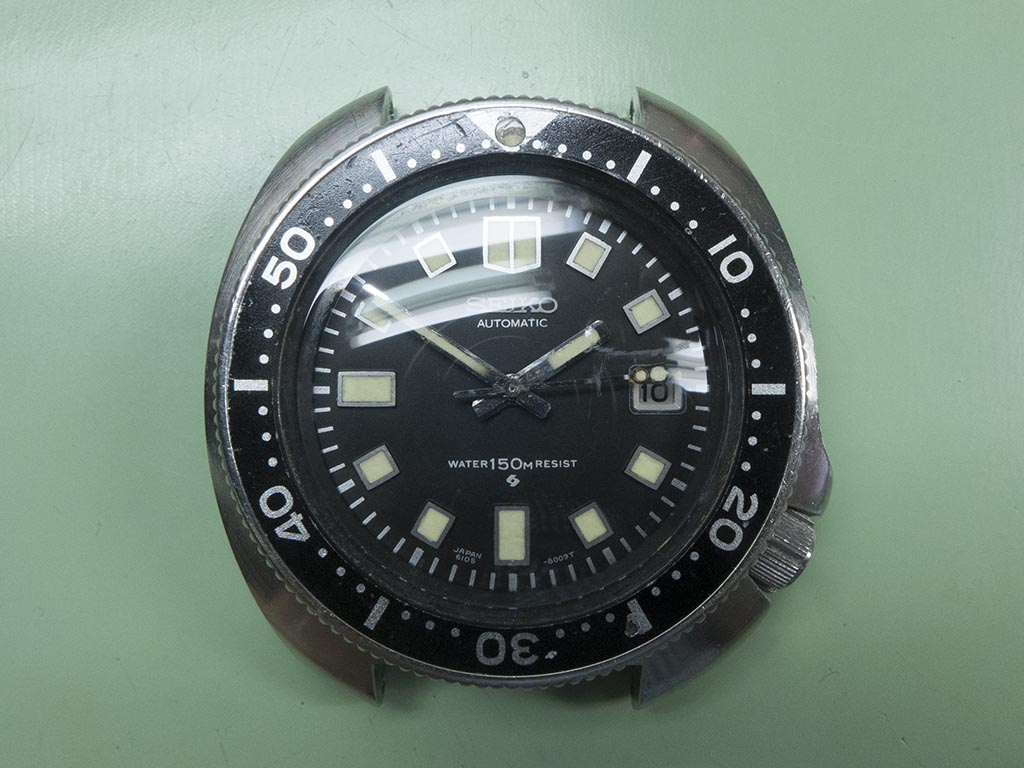
Seiko 6105-8110
Another one of these iconic divers has been across the bench, this example is in fantastic original condition and just needed a service and a couple of small jobs doing.
King Seiko 4402-8000
Back in 1968 during the last of the Chronometre competitions that were known as the “Accuracy Observatory Trials” at Neuchatel in Switzerland, the watches from Seiko were judged to have the most accurate mechanical calibres beating all entries from other manufactures. As well as entering competitions Seiko manufactured some astonishingly accurate watches for general sale during those days under their Grand Seiko and King Seiko lines, these were labelled (depending on the line) as Very Fine Adjusted (VFA), Superior Chronometer or just Chronometer. As accurate as these were even their “plain” (if such a term can be used) calibers were remarkable timekeepers. One of the big drivers behind all this increasing accuracy was that Seiko had two manufacturing plants, Suwa and Daini, that were set up in competition with each other to try and push the boundaries of technical and manufacturing development. The example featured in this article is a King Seiko 4402-8000 manufactured in May 1968, right at the time Seiko was winning the Chronometre competitions and striving to make the most accurate watches they could. The watch is powered by the calibre 4402a which is a hand wind, hacking, 25 jewel, 18,000bph movement. It’s a fabulous example which appears to be on it’s original stainless steel bracelet, again which is in fabulous condition.

Seiko 6105-8110
There’s not much more I can say about the 6105-8110 that I haven’t said already, but it’s always worth featuring one if I have the time! This example from March 1974 came in for a service recently.
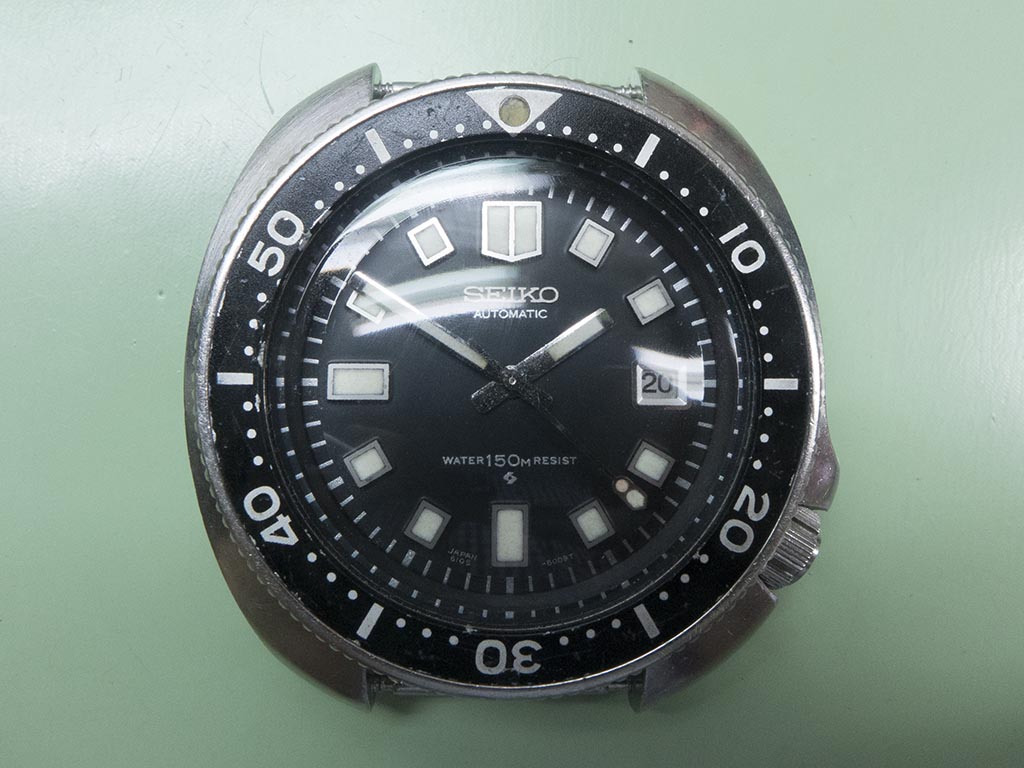
Seiko 6306-7001
I’ve written about these JDM 6306 dive watches before but it’s worth a revisit just to showcase what beautiful condition this example from 1978 is in. It came in recently from a well known Seiko enthusiast for a movement service and a pressure test. It’s in outstanding cosmetic condition for a 37 year old wristwatch, the only negative points were the reason it came in, it needed a service! The amplitude was low and positional variation and beat error were a little high.

 The Watch Bloke