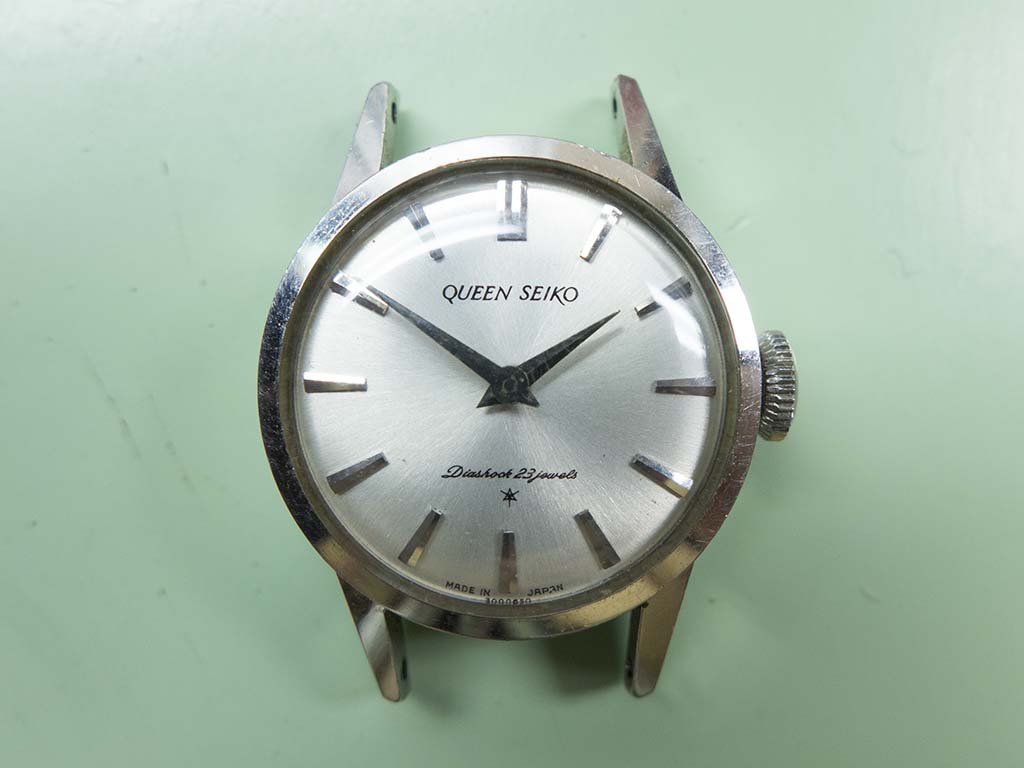
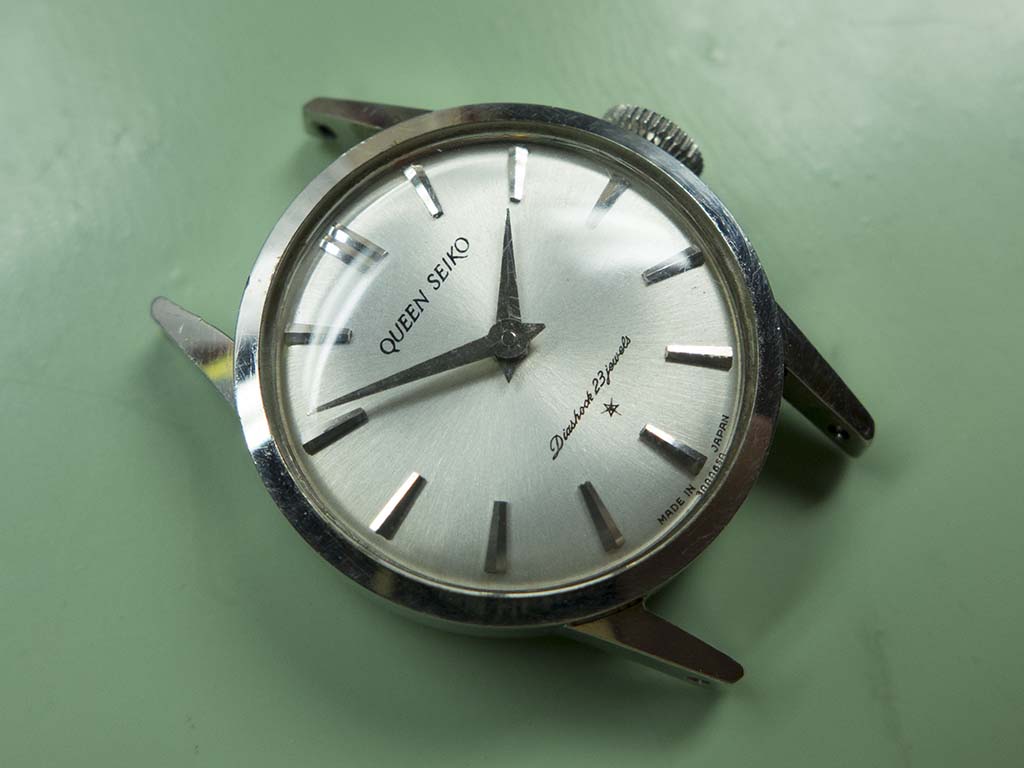
As mentioned in my previous post I’ve been spoilt with regards to interesting vintage Seikos recently and the subject of this article is no exception. I’ve never seen one of these Queen Seikos in the metal before and was quite unaware that Seiko offered them in platinum as an option! It’s powered by the calibre 1020c movement which was based on the calibre 10. These 1020 movements are manual wind, 23 jewel, 19,800bph beauties and come in a, b or c designations. This watch has the 1020c at it’s heart which is the top end movement capable of full adjustment of the curb pins and micro adjustment of the regulation.
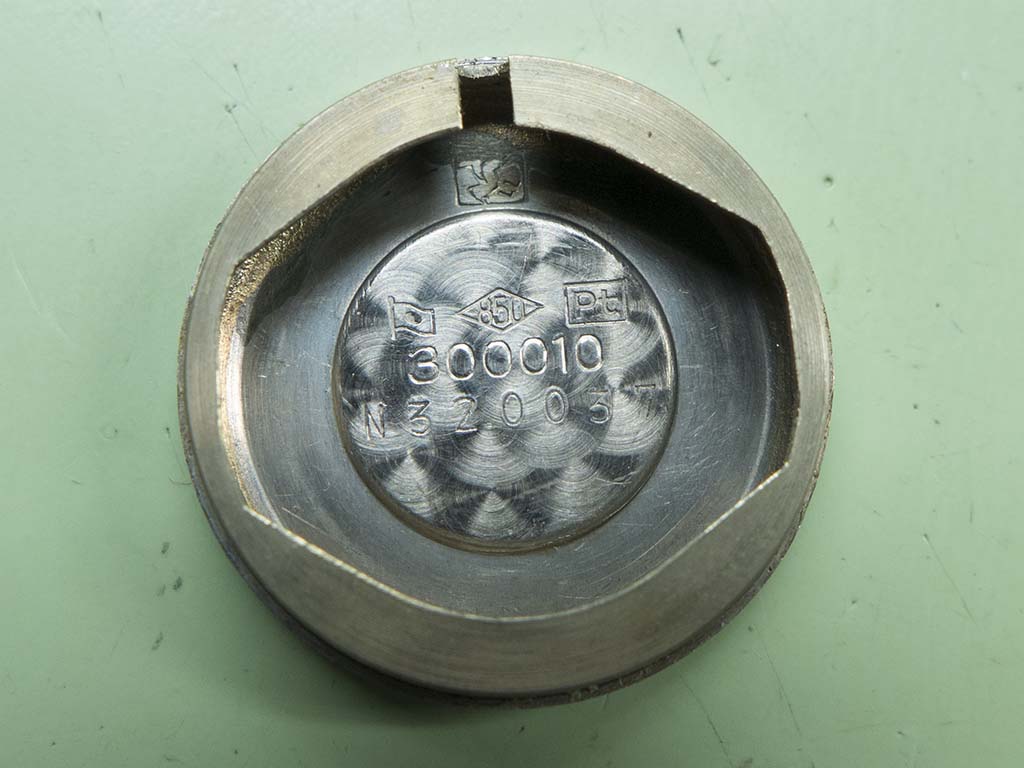
The caseback shows a stylised crown and a hallmark showing the platinum is 850 parts per 1,000.

The inside of the caseback shows a production date of November 1963 and has the stork symbol of the Daini manufacturing plant.
The dial and handset is in beautiful condition.

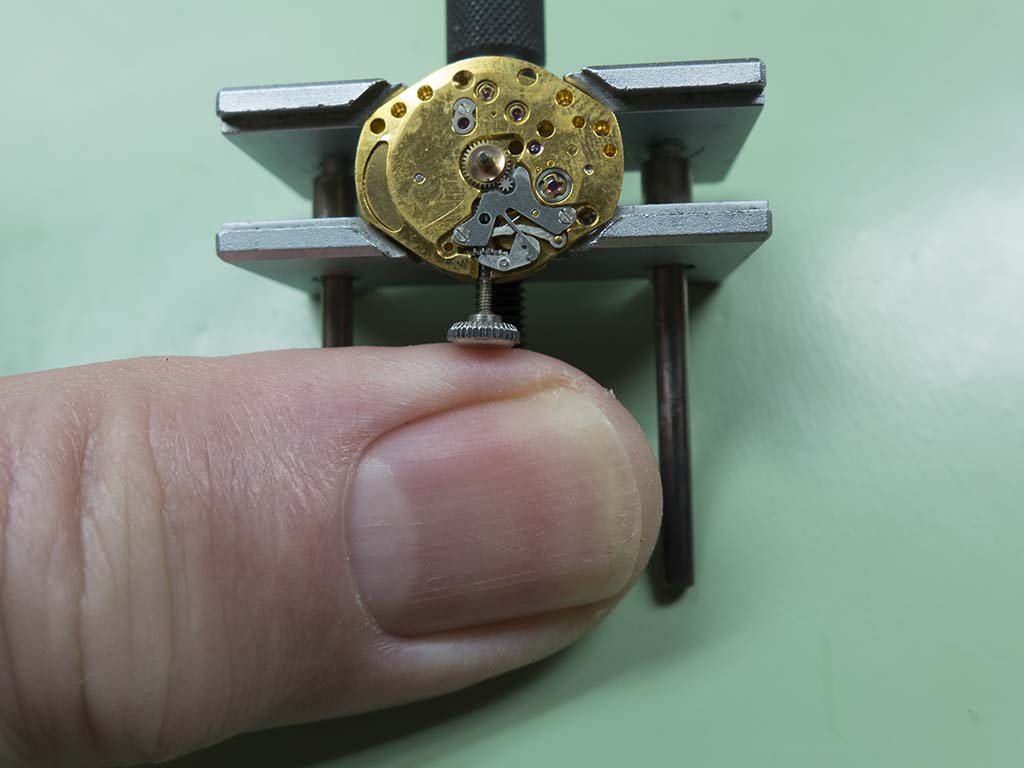
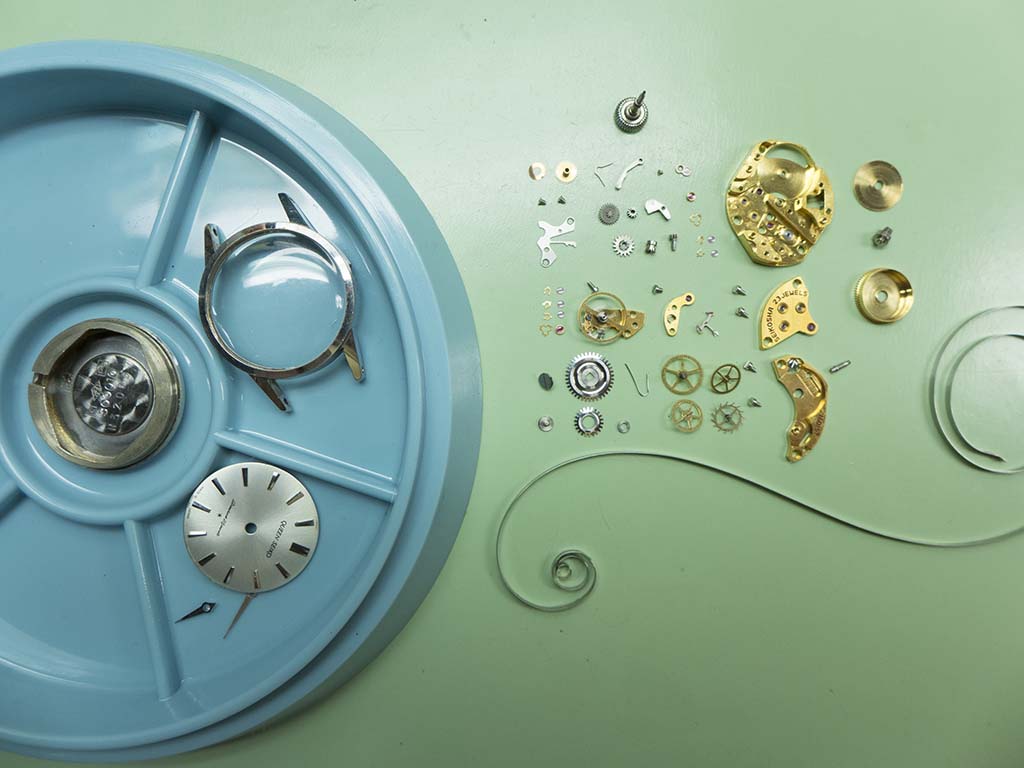
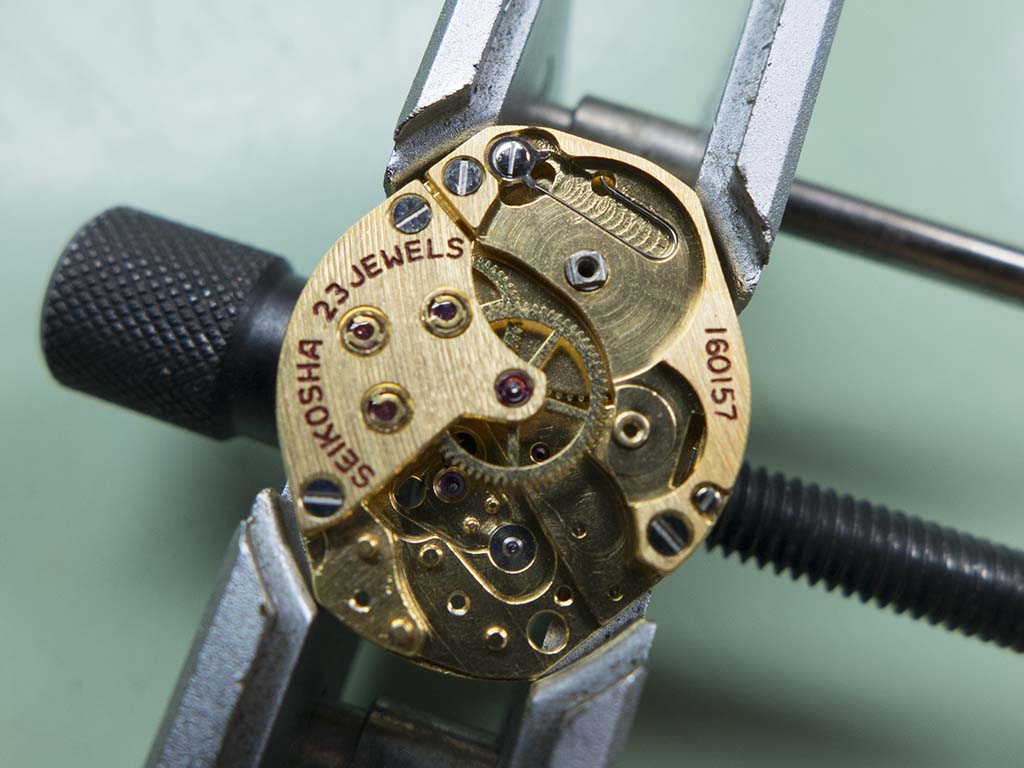
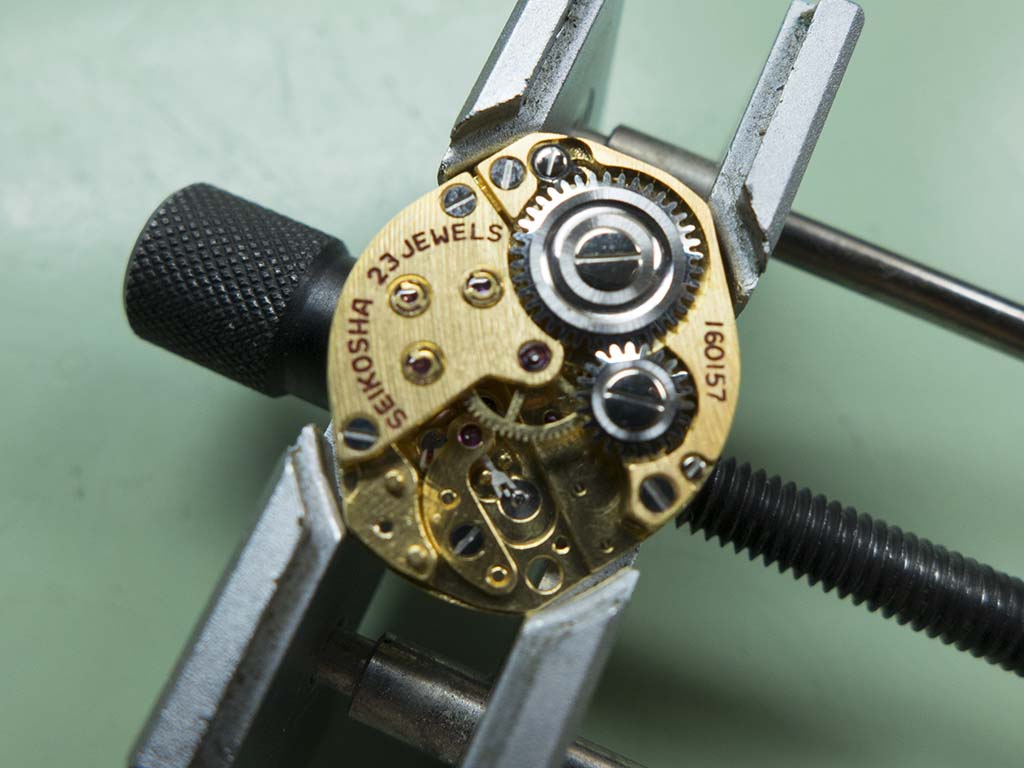
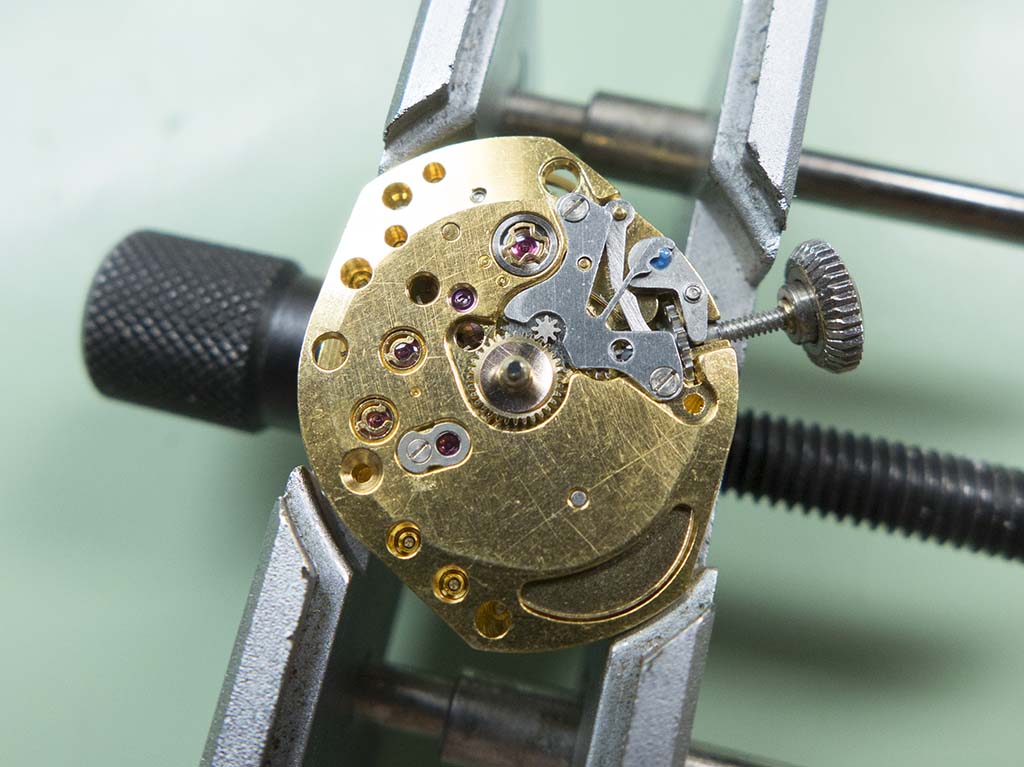
Under the dial is relatively straightforward with no date complication. These ladies movements are very different to gents ones to work on purely due to the scale of the components, the whole movement is smaller than my thumb nail 🙂
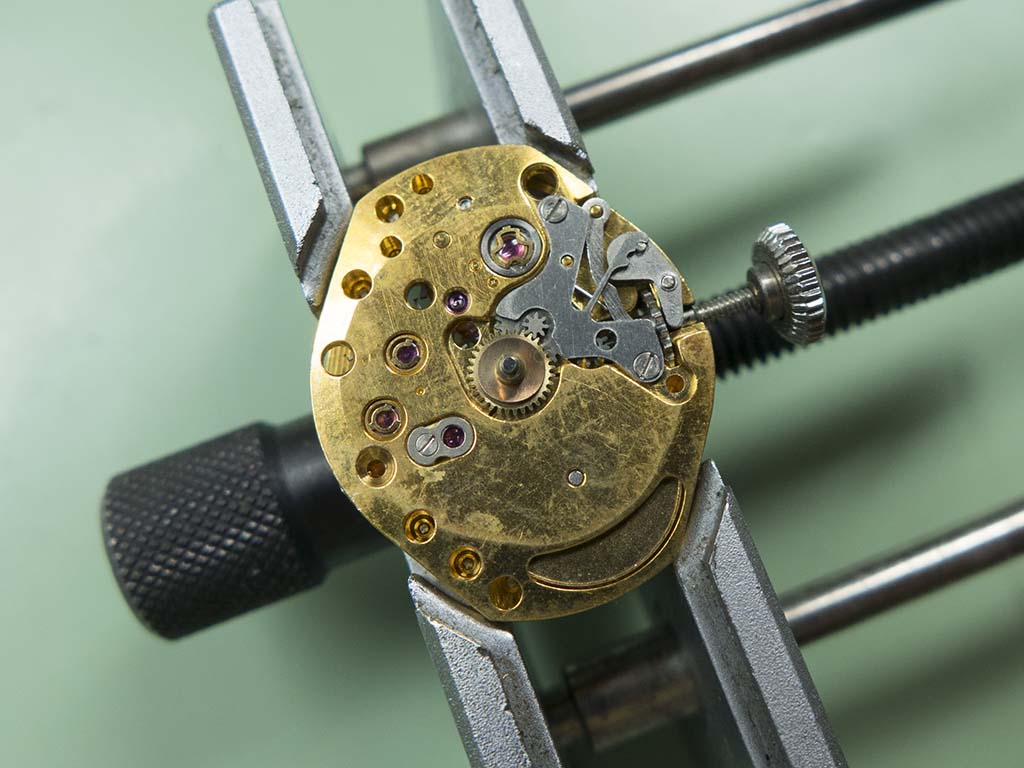
Another point with this calibre is the diafix springs (the horseshoe shape brass ones) are incredibly fiddly to remove and replace for cleaning and there are five of them, two this side and three the other! Normal gents diafix springs are bad enough but these are half the size.
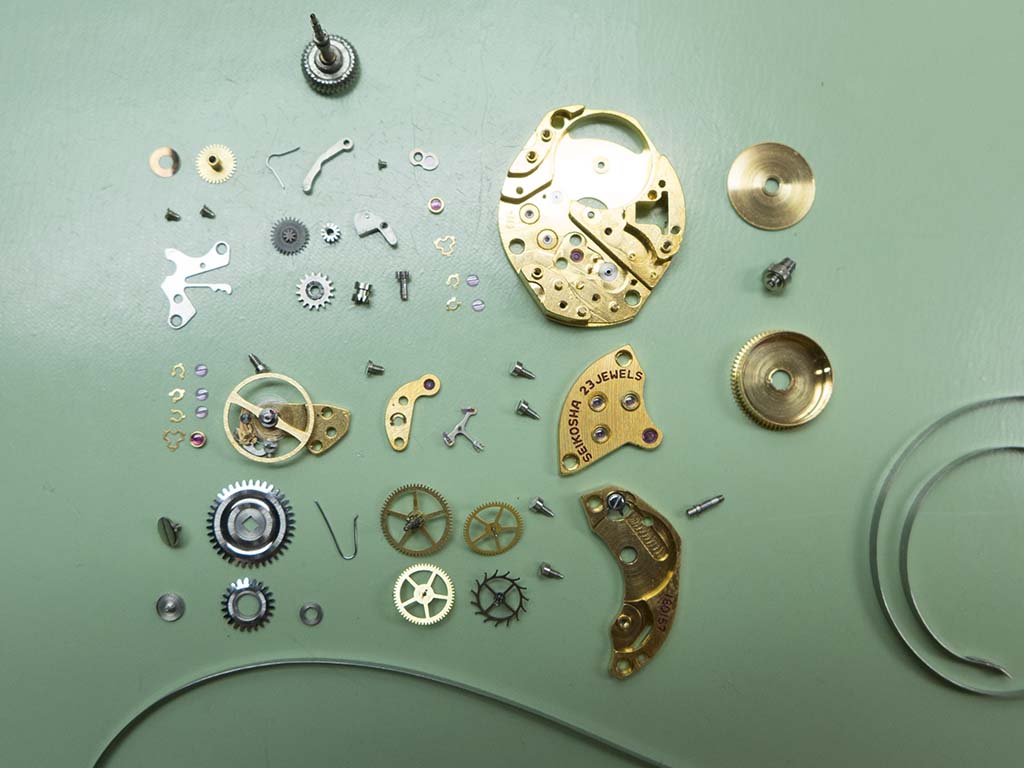
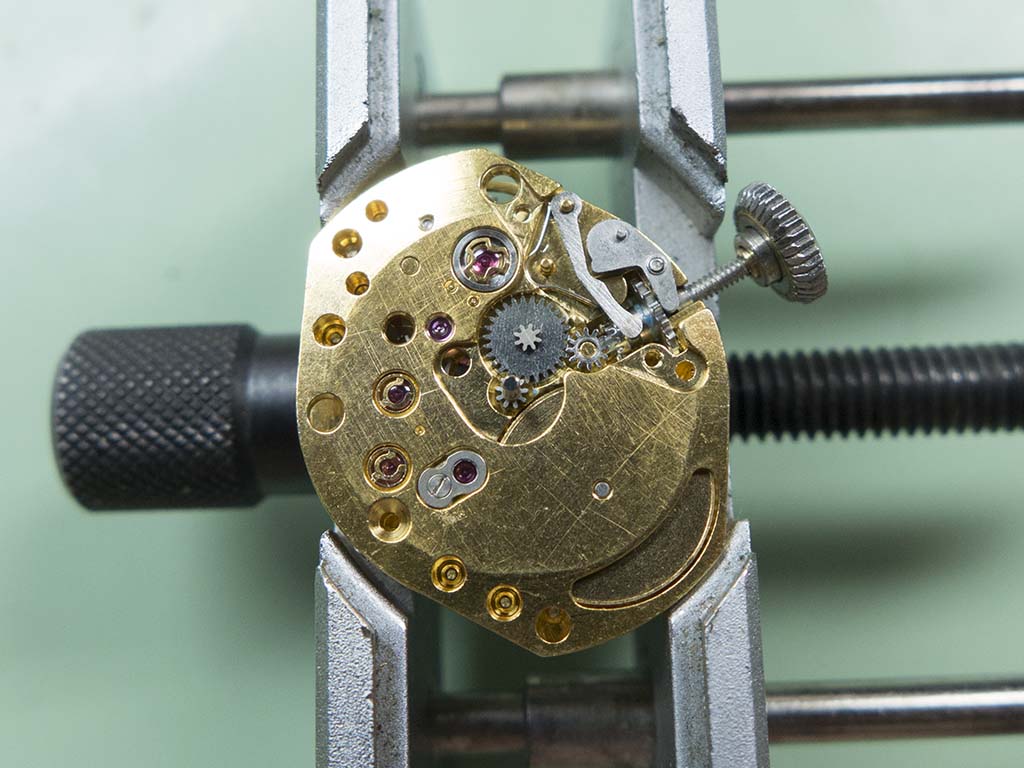
The keyless work is being dismantled in this shot.
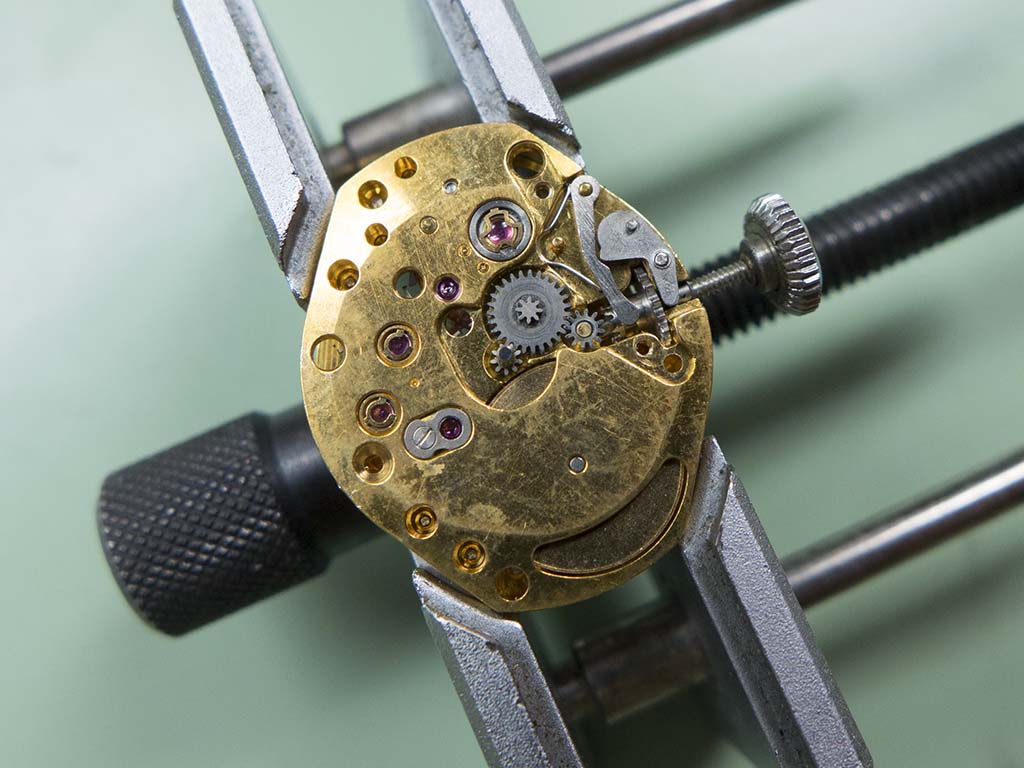
And the plate is fully stripped in this one.

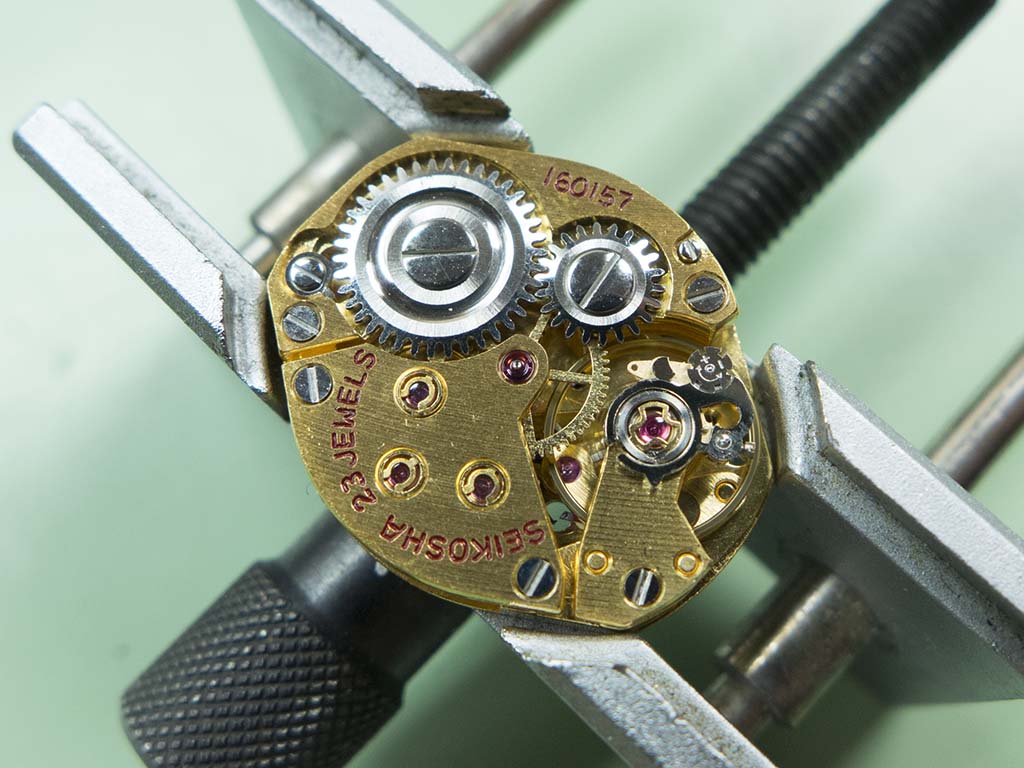
With the movement turned over you can see that it carries it’s own serial number as did most of Seikos higher end offerings back then.
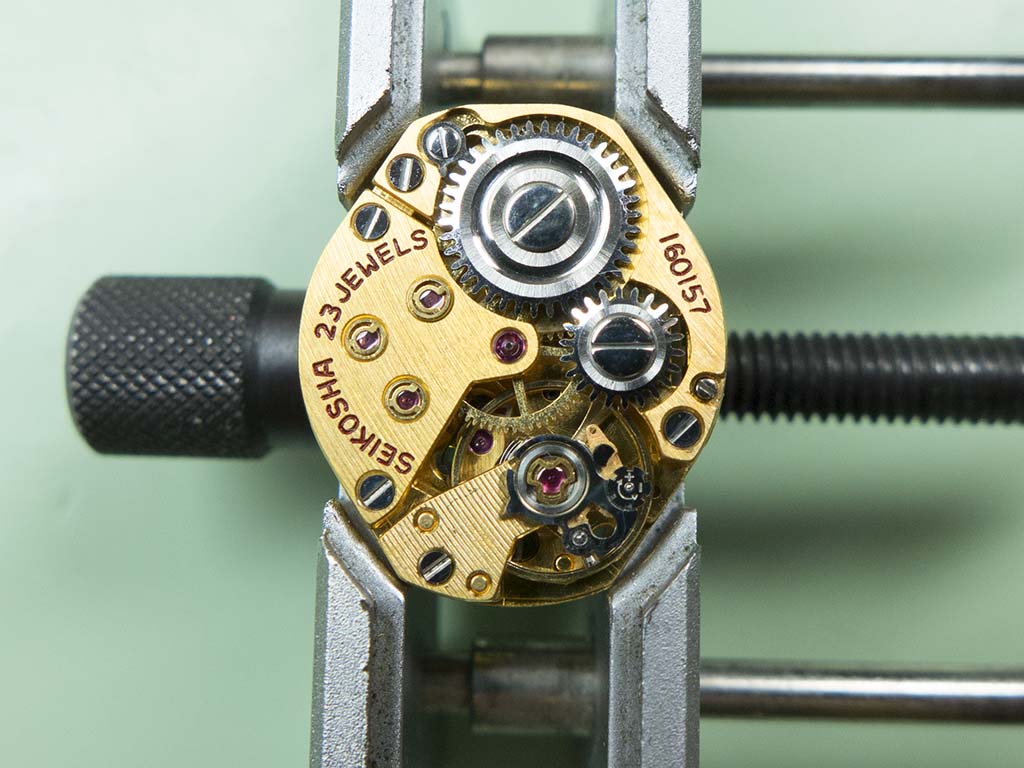
The strip down of the going train was fairly straightforward.
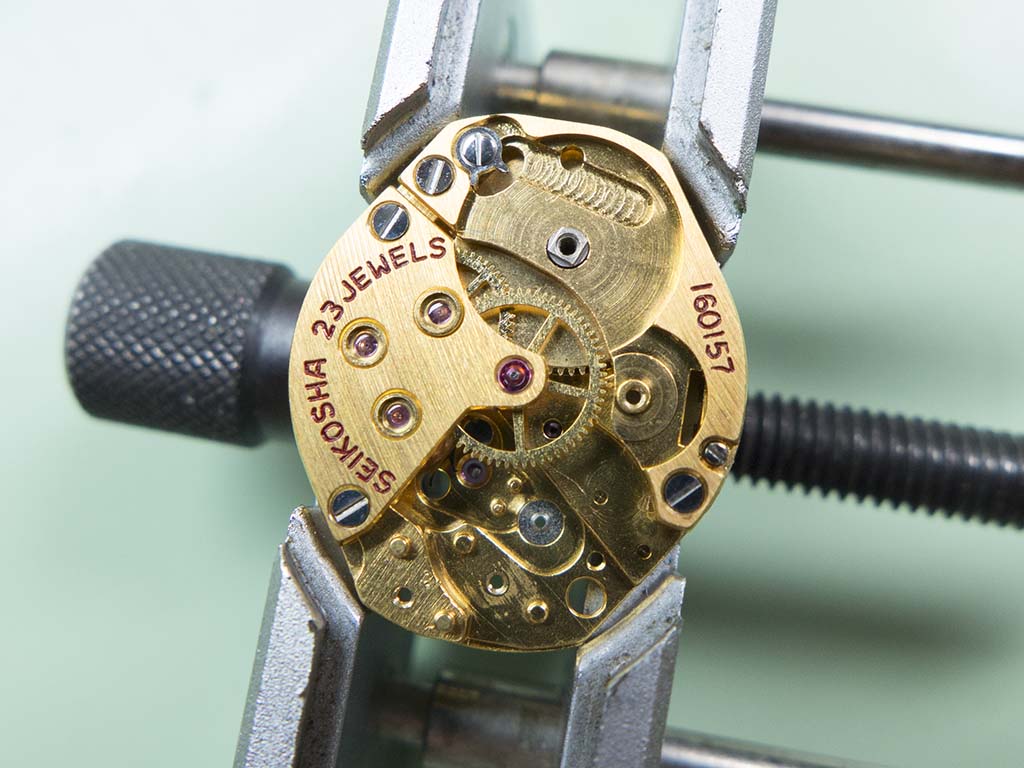
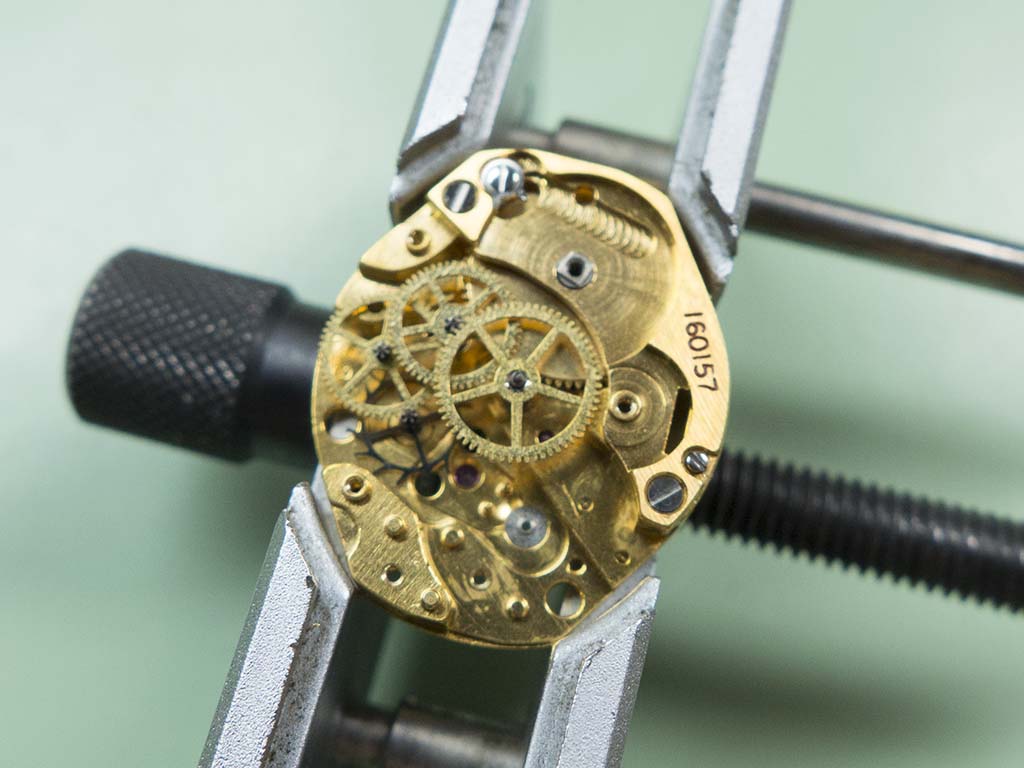

The movement was now ready for cleaning and inspection.
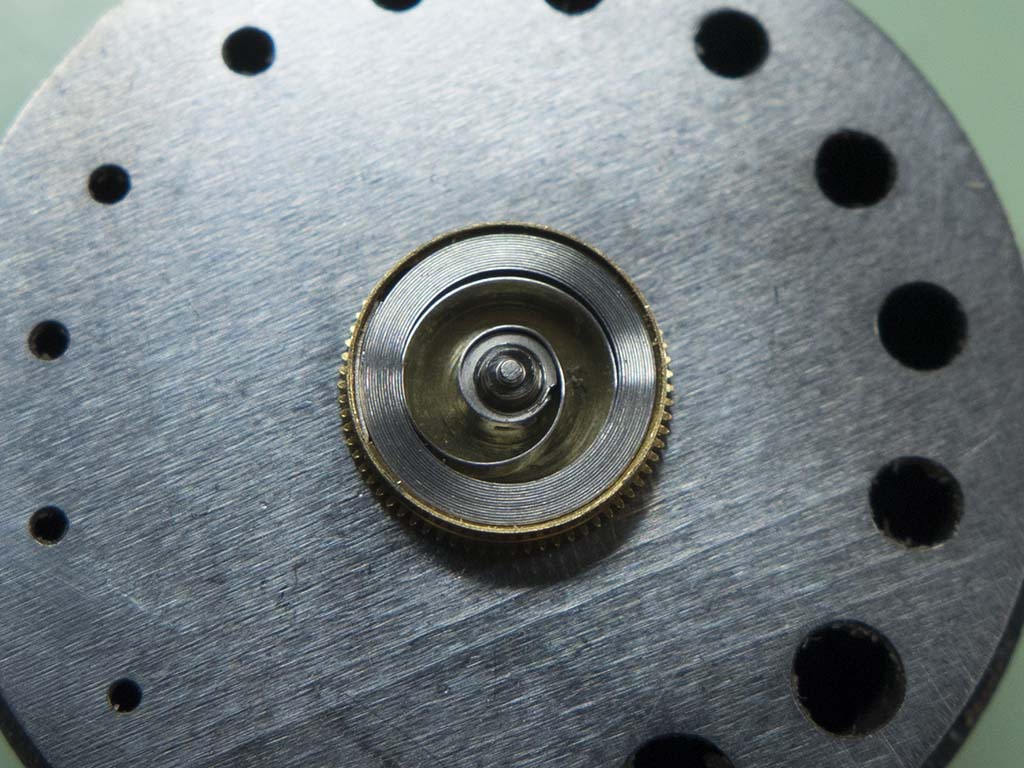
Reassembly began with the mainspring as usual. Forgive me as some of these shots are slightly out of focus, my camera threw a wobbly for some strange reason!
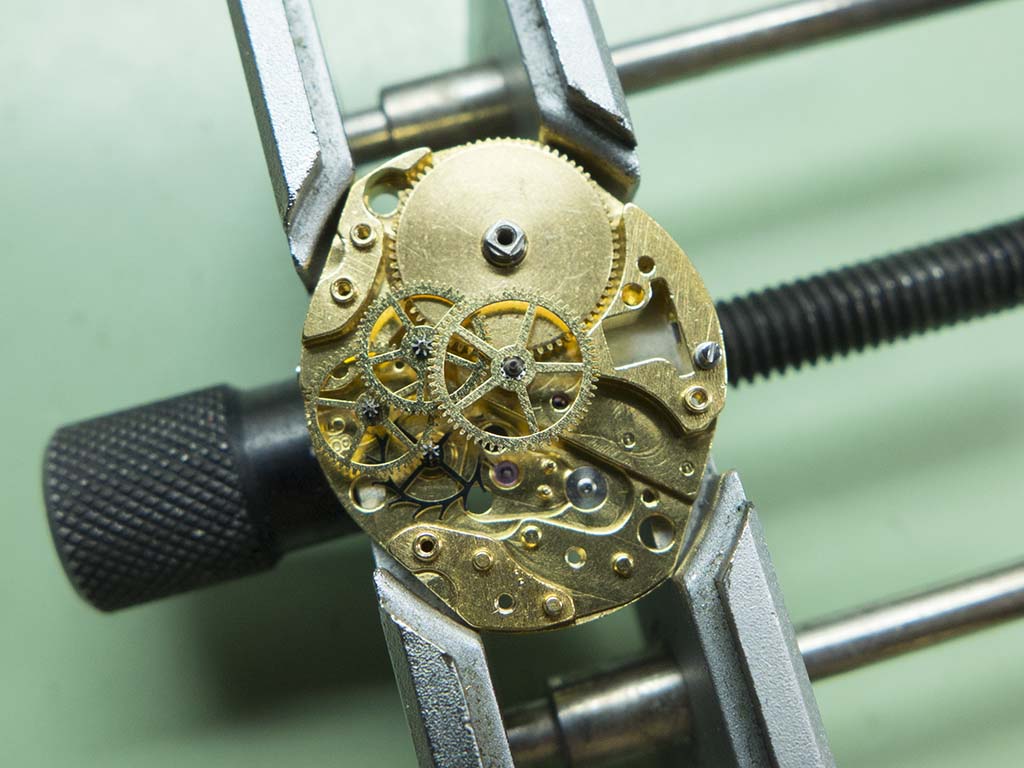
The only issue found during inspection was the hairspring was misshapen and out of level in the horizontal plane. A few tweaks with the number 5 Dumont tweezers got it back to where it should be but again due to the scale it seemed a lot more fiddly than usual.
The dial and handset was put back on at this stage and the movement placed into the caseback. These watches are most certainly not waterproof, they were sold back in the day as being dustproof but even that’s questionable! However most European and American watches were the same leading up to this date, it’s only with the advances in the dive watches of the mid fifties that water resistance technology eventually filtered down to dress watches.

It’s fully back in its case now and ticking away merrily, I think it’s a unusual and beautiful ladies watch which is good for a few more years of service now 🙂


 The Watch Bloke
Queen seiko what a lovely little watch , it’s regulator has such interesting design , would you enlighten me just how it works, great article . Thanks
LikeLike
As I recall the little wheel with the +/- is rotated which works on a ratchet to adjust the regulation by moving the curb pins around the radius of the hairspring.
LikeLike