I have a shed load of articles to post here, unfortunately I’ve been so busy recently that updating the blog has had to take a bit of a back seat whilst I attempt to deal with the servicing backlog! Anyway hopefully the updates should become more regular and I’ll start of with this lovely IWC that came in for a service recently. The model is an Aquatimer IW3568-08 and is powered by the IWC calibre 30110 movement which is essentially a breathed on ETA 2892-A2.
Author: thewatchbloke

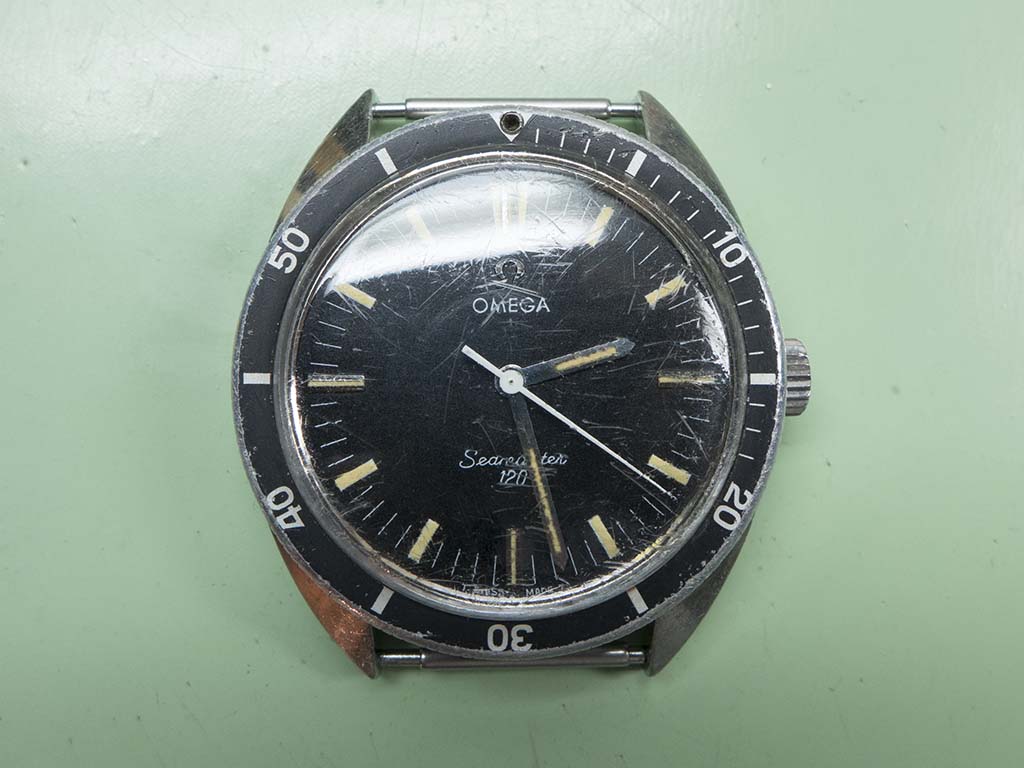
Omega Seamaster 120
I thought I’d feature this example as it’s one of the lesser trumpeted Seamasters that Omega produced but just as good looking and collectable as it’s 300 & 600 stablemates, in fact with it’s slimmer case it’s more at home with a formal business suit in my opinion. This one arrived for a service and a new crystal along with a relume of the bezel pip.
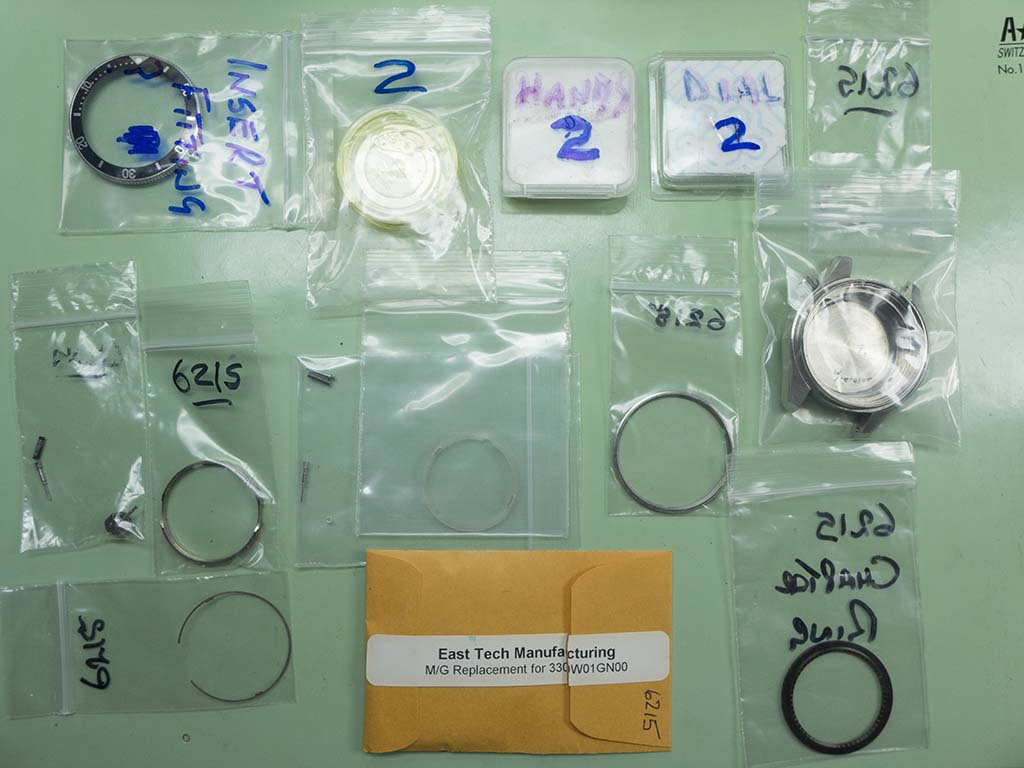
Seiko 6215-7000
This 6215-7000 was tackled recently and arrived in lots of small packages as can be seen from the picture below 🙂 It came in for the movement to be serviced and the rest of the components to be assembled. The 6215-7000 was Seikos first attempt at a 300m diver, launched in 1967 it featured a monocoque case and was powered by the calibre 6215 movement. This is an automatic wind, 35 jewel, 19,800bph hackable movement based on the 62xx platform. The monocoque case featured a screw down crystal retaining ring and a split stem.
Seiko 6159-7001
The festive break has allowed me to get the blog updated a little and catch up with a few jobs, one of these jobs being my 6159-7001. I’ve owned this watch for a few years now and as I’ve sourced the parts I’ve installed a NOS bezel, crown, crystal and seals in that time . Although it’s always run acceptably at about +15spd I’ve always been meaning to service it just so I know it’s the best it can be. Well I found the time over the break and it’s finally done! As can be seen cosmetically it’s in outstanding condition with an unpolished case which is just how I like my watches.

Grand Seiko 43999 calibre 430
It’s been bonanza time for vintage Grand Seikos here at watchbloke towers. This second generation GS calibre 430 had a problem with the hands only being able to be adjusted by rotating the crown clockwise, when turned anticlockwise it felt notchy and the hands didn’t move. The second generation GS’s such as the one featured had a more chunkier case than its predecessor, utilising sharp edges, mirror finishes, flat surfaces and contrasting brushed finishes that created a distinctive appearance. Seikos first designer Taro Tanaka developed this type of design to the classic style that Seiko used on its high end watch which became known as the “Grammar of Design”. This started with the next iteration of Grand Seikos, the 44GS of 1967 but it’s clear the DNA came from the 43999. The calibre 430 movement that powers the watch is a manual wind, 35 jewel, 18,000bph self certified chronometer grade movement featuring a date complication. This calibre was only used in the GS from 1963 to 1964 and was replaced by the calibre 5722 which had a higher beat rate of 19,800. The 430 heralded the last use of a low beat movement in a Grand Seiko.

Grand Seiko calibre 3180
This lovely Grand Seiko arrived in a non running state, the power couldn’t be wound on so there was obviously a problem with the mainspring or barrel. The Grand Seiko line was introduced in 1960 with the introduction of the calibre 3180 and continued in various guises until 1975 when it took a 13 year sabbatical. The brand was revived with introduction of the Grand Seiko 95SG quartz in 1988. The subject of this article is the original Grand Seiko, a calibre 3180 beauty, a manual wind, 18,000bph, 25 jewel, self certified chronometer grade movement. It was certified internally rather than by the Swiss COSC body, but to standards even more stringent than the Swiss organisation’s. The original Grand Seiko went through a few subtle changes during it’s 4 year life span, notably the distinctive Grand Seiko script on the dial started out being printed directly onto the dial in black, it then went to being carved into the dial and finally applied in gold as in the one featured. The cases were all 14K gold filled (as in rolled gold, a thicker version of gold plating) but a few were produced in platinum. I’ve yet to see a platinum cased example but I do know the owner of the one featured here has one complete with it’s original box and all it’s chronometer certificates. I’m not envious at all 🙂

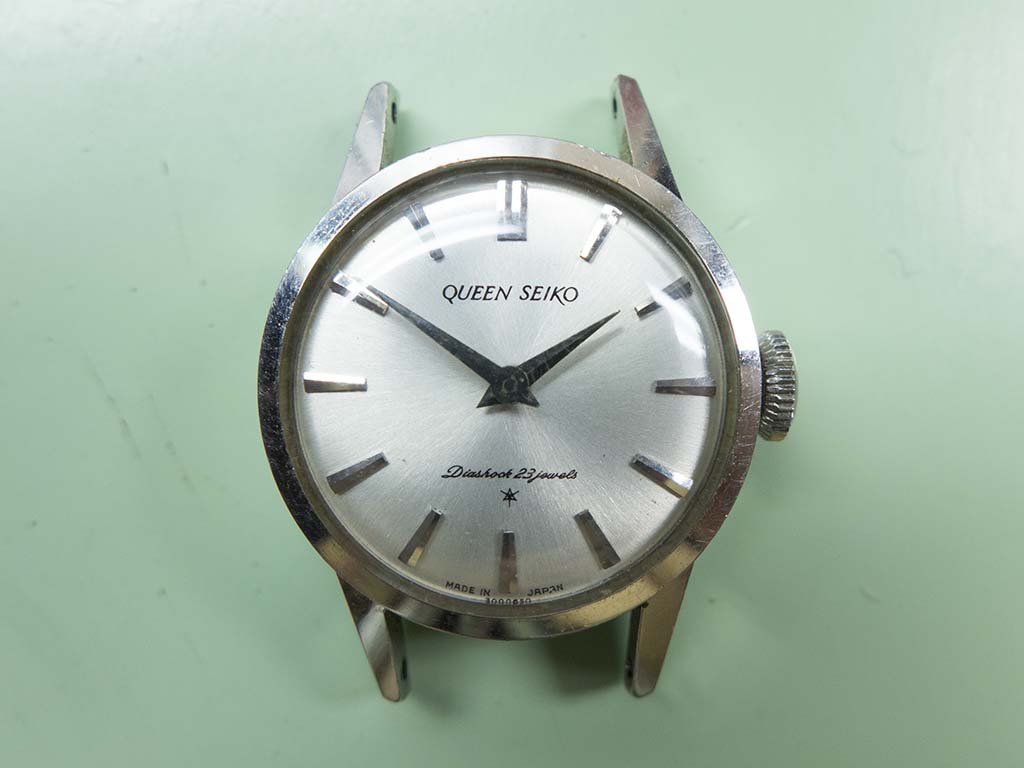
Queen Seiko
As mentioned in my previous post I’ve been spoilt with regards to interesting vintage Seikos recently and the subject of this article is no exception. I’ve never seen one of these Queen Seikos in the metal before and was quite unaware that Seiko offered them in platinum as an option! It’s powered by the calibre 1020c movement which was based on the calibre 10. These 1020 movements are manual wind, 23 jewel, 19,800bph beauties and come in a, b or c designations. This watch has the 1020c at it’s heart which is the top end movement capable of full adjustment of the curb pins and micro adjustment of the regulation.
Happy Christmas!
It’s that time of year again, I’m starting my break for the festivities at the end of today and I wish all my readers a very Merry Christmas and a Happy new year! I won’t be entirely idle as I hope to publish a few articles about some interesting jobs I’ve had on the bench recently but let’s get past the roast turkey and mince pies first 🙂
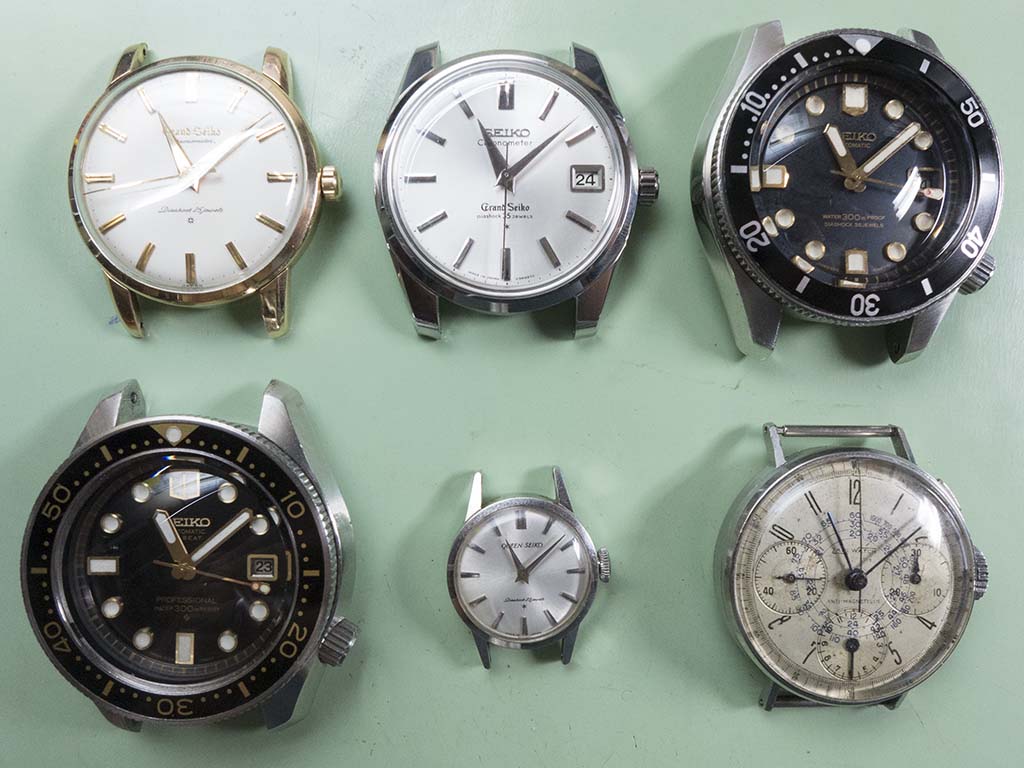
Today I’ve been reflecting on the past year and all the different jobs I’ve taken on, some great, some incredibly frustrating but ultimately all satisfying in one way or another. I then glanced at my final test windmill as it slowly rotated and thought I have the best job in the world. I’ve pulled the watches off the windmill to take a few pictures for you but where else would I get to work on a selection of beautiful watches like these! From left to right, the first ever Grand Seiko the calbre 3180 J14070GS, next is the manual wind Grand Seiko calibre 430 43999, next door to that is Seikos first ever 300m diver the 6215-7000, bottom row far left is Seikos first ever professional 300m diver the high beat 6159-7001, next is a platinum cased Queen Seiko and finally a 1940’s Zias triple register chronograph powered by a Landeron calibre42 movement. For a vintage Seiko nut like me it’s pure heaven!
Glycine Airman
Glycines Airman model introduced in 1953 became the companies most well known watch. Glycines chief sales director Sam Glur, on a Thai Airways flight listened closely as the pilot he was flying with described his requirements of the ideal pilot’s watch. When Sam returned from his trip he mentioned his conversation to Glycines owner Charles Hertig Sr. and almost immediately development began, remarkably the whole process only took four months for the watch to be completed. It was rolled out in the American market first and was an instant hit, with its 24hr dial and unique hacking feature which stopped the seconds hand exactly on the 24hr marker. Early watches used the Felsa 692 calibre movements until 1960 when they were replaced by A. Schild movements. This particular example is a pre 1960 model and came in for a service and to sort a problem with the winding and handsetting. The owner also wanted the green lume changed on the hands for something less jarring.

Bulova Accutron
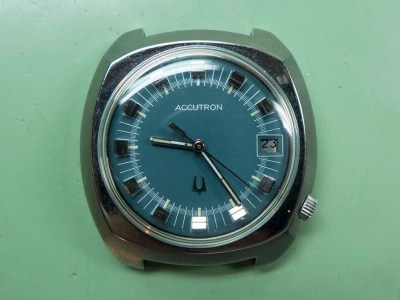
Accutron watches were developed by Bulova in the 1950’s in response to Elgin and Lips introduction of their electric watch. While their watches still retained an oscillating balance wheel to keep time Bulovas Accutron was driven by a tuning fork vibrating hundreds of times a second, meaning the Accutron was the worlds first electronic as opposed to electric watch. The genius engineers behind the miniturisation of the tuning fork concept which had been previously demonstarted in clocks were Swiss born Max Hetzel aided by William Bennett. By the time the Accutron was offered for sale to the public in 1960 the tuning fork was vibrating at 360 times per second and drove an index wheel via a pair of jewelled fingers. Each accutron coil has 8,100 turns of insulated copper wire at 0.015mm diameter which equates to 80 metres per coil! The Accutrons reliability is legendary and can perform flawlessly for decades with only the occasional battery change and service. Due to the unique operation of a tuning fork watch you can actually hear the watch hum whilst it’s running!
The Accutron featured in todays article was a 21st birthday gift for the owner in 1971 and has reliably provided him with time keeping until recently when the calendar mechanism jammed and battery life was down to about 5 months on a fresh cell. It’s powered by the calibre 218 movement.
 The Watch Bloke