Apart from Stephen Netherwoods excellent blog and one or two others there’s not a huge amount of information about vintage Citizen watches on the web, especially showcasing the internals! Hopefully this post will help redress the balance slightly. This 1960’s Citizen Parashock came in recently for a mechanical overhaul and a new Crystal.
Vintage
Elgé Genève super compressor
Elgé Genève watches were produced by the French manufacturer Ets Yola based in the large town of Annecy in the French Haut-Savoie region, which has a strong watchmaking tradition, in fact Annecy’s just over the Swiss border from Geneva. They were in business from the mid 1940’s until the early 1970’s and other Ets Yola brands comprised of Yola, Elga and Elgé. This particular example is a dive watch powered by the A Schild 1712 movement housed in an ESPA Super Compressor case. It’s in remarkable condition and the owner just wanted a full movement service, the lume examining and stabilising (it appeared a little fragile in the hands) and if possible the case made waterproof once more.
Omega Seamaster calibre 520
Omegas Seamaster range of watches needs little introduction to anyone with even just a passing interest in vintage wristwatches. Introduced in 1948 to coincide with the brand’s 100th anniversary the line is still being manufactured today, all be it unrecognisable from the first incarnations which were loosely based on watches made for the British military at the end of World War II. This example dates from around the late 1950’s and is a stainless steel cased example.
Citizen 62-6198
I never pass up the chance to showcase one of these 1970’s Citizen dive watches, they do seem to fly under the radar somewhat, at least compared to the 1970’s counterparts from the Seiko stable. They come in many different varieties, far too many to go into detail here but well worth a read is Stephens blog section about the vintage Citizen divers of the 1960’s to 1980’s.
This particular one came in for a new crystal and insert. It’s one of the more sought after Citizen 150m dive models of the time as it has the red date numerals and “6000” on the caseback in place of the more usual “Citizen Watch Co”. These can be dated via the serial number using a similar system to that of Seiko. If you know the decade the watch was produced in the first digit represents the year of manufacture, the next two digits represent the month. This example starts 406, as these were produced in the 1970’s we can tell it’s from 1974, the 06 means June was the month it was manufactured. Stephen has produced a wonderful movement table for determining the date of production of vintage Citizen watches.
A dislodged yoke, the alternative approach
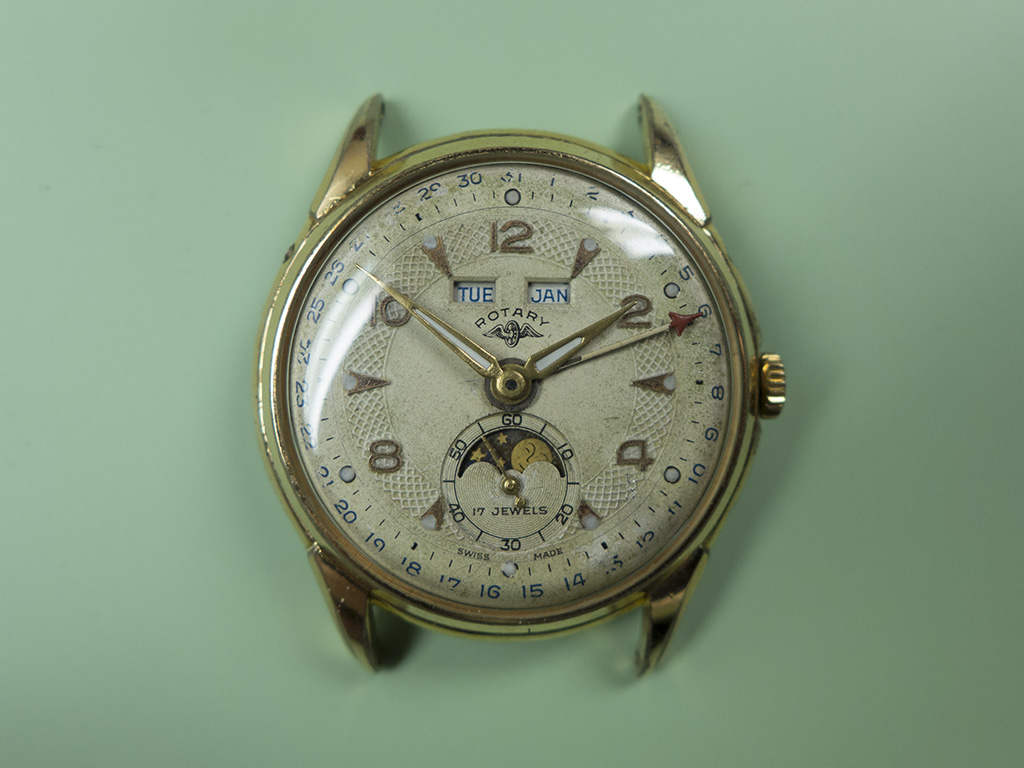
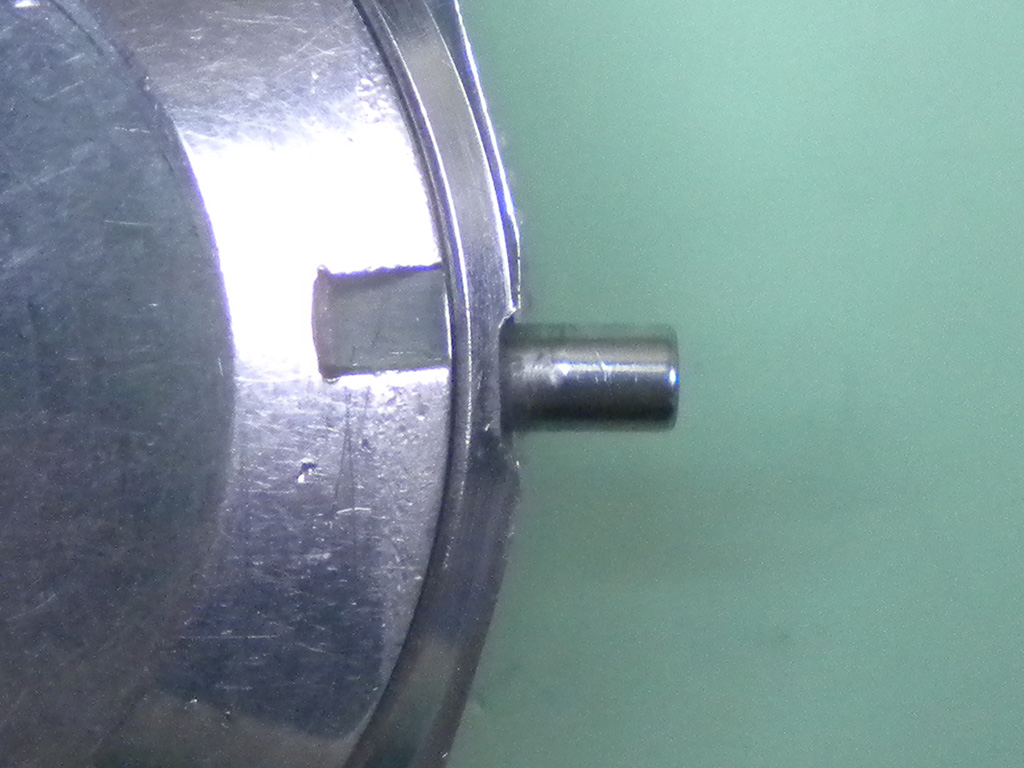
This lovely 1950’s Rotary triple calendar moonphase came in with the all too common problem of a dislodged yoke.
Seiko Chronometer
This 1972 Seiko 5626-5020 Chronometer came in for refurbishment at the end of last year.
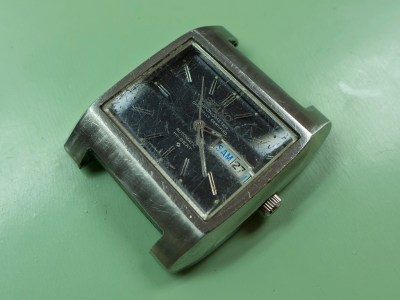
It’s screams 1970’s from every pore with its TV style dial, chunky case and faceted crystal. It’s powered by the 25 jewel, 28,800bph, calibre 5626a automatic movement. It also has the benefit of manual winding and hacking, the lower grade Seiko movements of the day tended not to have these features. These movements were a step up from the 21,600bph 5606a which normally found their way into Seikos Lord Matic range of watches. The 5625/6a was destined for the King Seiko range which also includes their line of “Superior” Chronometers which were produced at the Suwa plant, and “Special” Chronometers which came from the Daini plant. This particular model isn’t branded a King Seiko, but it is in all but name and has the legend “Chronometer Officially Certified” below the Seiko logo. The 56xx Chronometer was built to a specification of -3/+8spd and was certified by the in-house Seiko chronometer standard testing, the equivalent of the BO (Basel Observatory) Chronometer standard. A nice touch is that these chronometers were serialised with individual numbers engraved on the movement. (more…)
Another 62mas saved
I make no apologies for the fact that the Seiko 62mas is my favourite vintage Japanese dive watch. For me, the case size at 37mm is perfect and the design is a classic. I’ve owned every variant and restored many more of these beauties so when I was offered a case, bezel and dial I thought they would be fine for spares at the least. When it all arrived the case had no tube so was essentially useless and the dial had no feet! The bezel was a nice example though. Well these parts were put in stock and I thought no more about it. As time went by I picked up a spare 6217a movement complete with the case ring and some NOS crowns, stems and crystals. In the mean time I was contacted by a friend of mine who mentioned he was actively looking for a 62mas diver and did I know any for sale? I remember I had this project tucked away so I said if he hadn’t found one by the time this was finished he could take it if he liked. This gave me renewed interest in the project and when I revisited the case I realised I had enough parts for a complete watch if it wasn’t for the missing case tube that had been butchered out. I thought I’d have a go at fitting a generic tube of the correct dimensions, after all I had nothing to lose! I reamed out the hole in the case to the size of a suitable tube, however there were still some rough spots in the hole that I couldn’t remove as the diameter would have ended up too large. Although the tube pressed in nicely I decided to smear some slow curing two part epoxy around the inside of the hole and on the tube to prevent the possibility of any moisture ingress. The pictures start here, I didn’t take any earlier ones because in my mind at that time they were essentially just spare parts!
Here is the new tube in place in the case.
Gold Omega dress watch, calibre 1030
This lovely 1970’s Omega dress watch came in for a service a short while ago. I was struck by the simple, very elegant styling, the whole watch hangs together beautifully from the baton hands and applied indicies to the dial that fills the slender 9k gold case with its baton type lugs. It just looks right!
Once inside, the calibre 1030 movement is every bit as lovely as the external components, you can tell the rhodium plated movement hasn’t been built down to a price, again it’s just right. (more…)
The Seiko one button chronograph
This little one button chronograph came in for a service and crystal change earlier in the year, It’s a Seiko reference 5719-8992. As you can see it’s actually out of the case and in a movement holder in this shot.
These little one button chronographs are interesting watches in Seikos development. They marked the first commercial chronograph that Seiko developed for the mass market, whilst Seiko had made a chronograph model back in the forties it wasn’t available to the general public as all production was destined for the Japanese military forces. The 5719 and 5717’s were brought to market on the back of the 1964 summer olympic games in Tokyo where Seiko were the official timekeepers. (more…)
You can ring my Bell
This Seiko 4006-7011 came in recently for a service and to sort out a problem with the date changeover.
The Bellmatic line was originally released in 1966 and carried on to the late seventies. The earliest Bells used the date only calibre 4005a movement, these were soon phased out and the day/date 4006a was used from thereon in. The alarms spring is wound by the crown whilst the movement is wound automatically. To set the time of the alarm you pull the crown out one click and rotate the indicator on the chapter ring to the desired time. As soon as you pull the button above the crown out the alarm is then set, when it sounds just push the button back in to stop it. (more…)