The International Watch Companies mecaquartz range of chronograph watches use a hybrid movement with quartz powered time and chrono functions coupled with a mechanical reset. The mechanical reset instantly snaps the registers back to the rest position as opposed to a fully quartz movement which has to advance them back to rest. The movements were based on the Jaeger LeCoultre calibre 630 and 631, the 631 having the addition of a moonphase indicator. These movements have two motors, one powering the timekeeping hands and the other powering the chronograph. The watch featured is based on the 25 jewel 630 calibre. As you can see from the photograph it has an unusual date indicator, much like a pointer style but different in as much as only the two red bars that frame the date are visible on the dial. It came in with various issues, the most immediate being that it didn’t run, neither the time keeping or the chronograph.

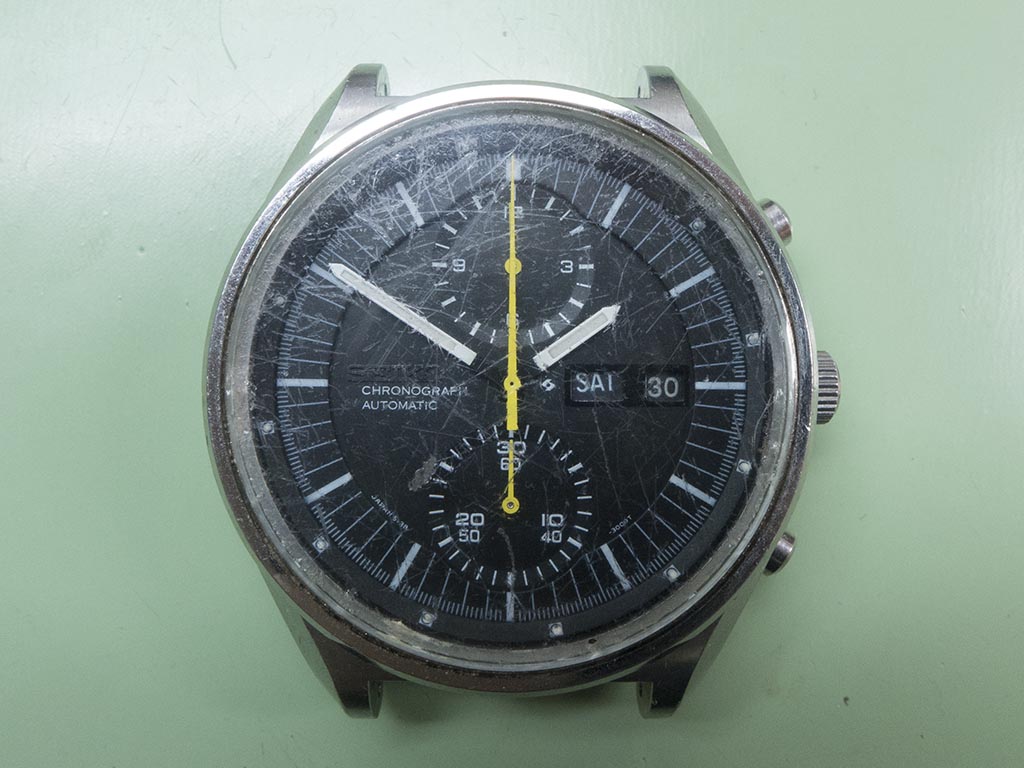
Seiko 6138-3002 chronograph
Seiko is well known for getting their 6139 chronograph to market in February 1969, the first automatic chronograph available to the public at that time. The story goes they wanted to release the twin register 6138 first, but because of the extra layer of components for the hour recording wheel it’s a more complicated watch than the single register 6139 and it wasn’t moving forward as fast as they’d like. Consequently they focused their energy on getting the 6139 to market to try and beat the two other contenders who were also developing automatic chronographs, namely Zenith-Movado group and a joint effort from Breitling, Hamilton/Bren, Heuer/Leonidas and Dubois-Dpraz. The arguments are still being done to death as to who actually was the first to market but my take is Seiko takes that accolade, your views may differ! This 6138-3002 came in for a full movement service as it wasn’t running correctly and a new crystal.
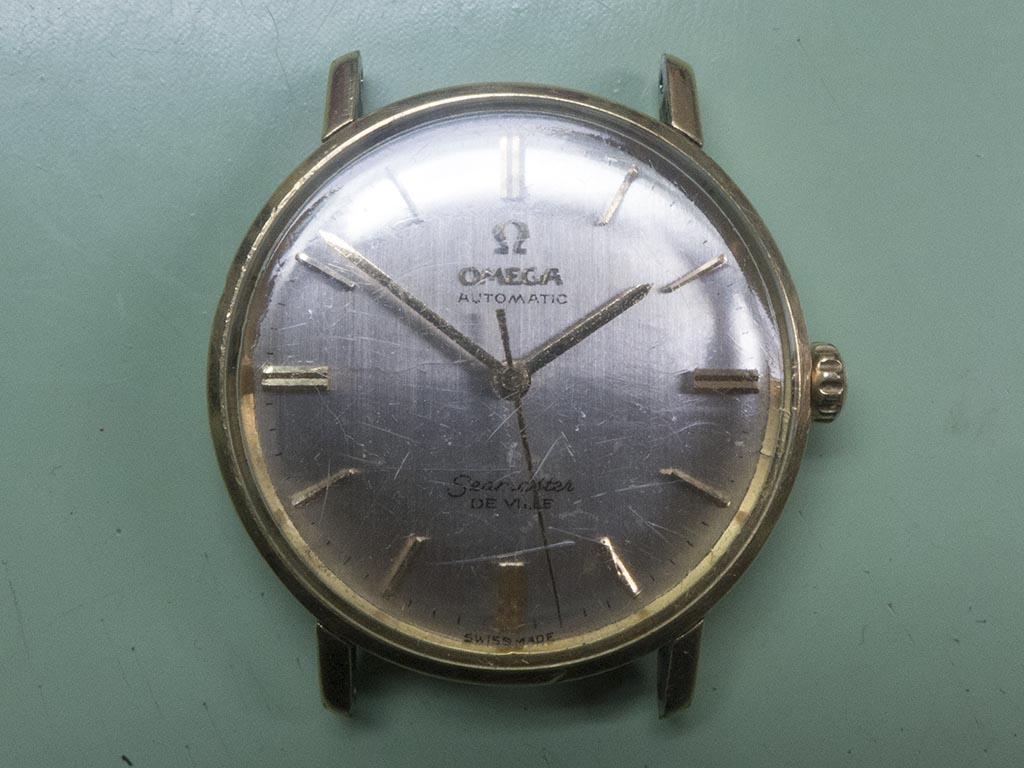
Omega Seamaster
I’ve written a little about the Seamasters history in previous posts and here’s another one for your delight! This “De Ville” example from about 1964 has a stainless steel “Unicase” case with gold capped lugs and a gold bezel and crown. It has a lovely linen type dial with applied gold indicies and gold baton hands.
Omega SMP Quartz
Omegas Seamaster Professional series of watches have been produced since 1993 but the Seamaster series was actually introduced in 1947, with that history behind them you can see they are a very popular watch with the non collector market as well as collectors. The SMP comes in many different variations including chronographs, GMT’s, divers and even an APNEA model with a unique timing function for the apnea free-diving breathing technique! In addition to this they come in a huge array of sizes from ladies models through to the 49.2mm Railmaster version, and many different limited editions versions celebrating their link with the Bond movies. This particular quartz powered model came in for a full movement service and basic pressure test.

Seiko 6206-8040 Business
During the 1960’s a lot of different Seiko models carried the “Business” or “Business A” logo. This branding appealed to Seikos marketing department for a short period and seemed to be aimed at the Japanese salary man. He could proudly wear his new Seiko to work knowing it was designed for “business” people! The example featured is powered by the calibre 6206B, an automatic wind, 18,000bph, 26 jewel day/date movement. As I’ve mentioned before the 62xx series powered a vast range of Seikos models from divers to Grand Seikos. This one came in for a service and to sort out the common problem of the crown jumping whilst setting the day, date or time. As can be seen these models are a handsome watch which wear a lot bigger than they actually are due to the slim bezel making the dial look huge. A feature I particularly like about these is the full day window, these were typically positioned at 6 or 9 0’clock on the dial. The sunburst finish of the dial is also a nice touch.

Seiko 6217-8000
And yet another 62mas is featured today, but not any old 62mas – this is a rather special one. I picked up the watch a while ago and it has been sitting in the project drawer for some time now whilst I a) decided what to do with it, and b) actually arranged my schedule so I could get on with it. As you can see the watch wasn’t in too bad a condition when it arrived, it was minus an insert but complete. A yobokies insert was purchased and that was fitted before this shot was taken.

Seiko 6217-8001
Another 6217-8001 is featured today, I can’t resist them! This example was purchased new in 1966 by the current owners father who was then a seafaring man and a bit of a character by all accounts.

Seiko 6306 Scubapro 450
The Scubapro 450 is based on Seikos 6306-7001 model, and were produced in the late 1970’s as part of a marketing contract in conjunction with the Scuba-pro dive equipment company. The model it’s based on is a Japanese domestic market watch produced alongside the very similar 6309-7040. The difference between the calibre 6306 and 6309 is the 6306 has a kanji day wheel, has four extra jewels, it has a hacking mechanism and has different machining around the crown making the opening slightly larger. The difference between the Scubapro 450 and a stock 6306 is just the printing on the dial. The most obvious difference is the “Scubapro 450” script situated above the “Water 150 Resist” on the dial, but a harder to see change is the dial code went from 700L T to 700J T. It’s generally accepted that the Scubapro versions were produced between 1978 and 1979 but to muddy the waters examples have surfaced with caseback dates of 1976, 77, and 83. Were these actually produced in those years or have the casebacks been changed? The 1983 example is doubly strange because that one post dates 6306’s end of production date of 1981! As ever with vintage Seiko nothing is clear cut – part of the appeal maybe? The example featured below is in outstanding condition and belongs to a very knowledgeable UK collector. It came in for a full movement service so I seized the chance to document it!

Cyma Navystar
This little Cyma Navystar came in for a bit of TLC recently. The Navystar range was introduced in the 1950’s and encompassed many different designs and movements, the common theme being it was a rugged waterproof watch in a slim case. There were over 20 patented technological innovations introduced to allow these timepieces to function under particularly demanding circumstances. The Cymaflex logo at the botttom of the dial refers to the patented anti shock system used on the balance staff.

Seiko 6105-8110
Every now and then I get a watch in that seems to fight me at every turn, and this particular 6105 is one of those watches! It arrived looking a little worse for wear, the lume was starting to degrade on the dial and the handset was well advanced with the rot. It had an aftermarket insert fitted but didn’t actually look to bad at first sight.

 The Watch Bloke