At the time of its introduction in 1964 the 6218-8971 Seikomatic Weekdater was the top of the range flagship of the Seiko automatic lineup. The 1964 Weekdater was the immediate, automatic equivalent of the 1964 Grand Seiko hand-wind, before the appearance of the first automatic GS in 1967. The 6218 movement’s an automatic, 35 jewel, 18,000bph, hacking calibre based on the 62xx platform that powered everything from Seikos World Time and their first dive watch, through to the Grand Seikos of the era. Both the 57GS/43999, 6218 and 62GS have 35 or 39 jewel movements and are all examples where jewels were added to stop what has been translated from the Japanese as the ‘shake fall problem’ with the datewheel. The 1965 example featured below came in for a movement service and is in lovely original condition.
Vintage

Seiko 6309-7040
Not a lot more can be said about Seikos 6309-7040 to be honest! There’s a wealth of information out there but a quick history of the watch is that it was the replacement for the previous asymmetric 6105-8110 diver, and the key changes were the turtle type case design with a proper screw down crown, a fully printed dial that did away with the framed lume wells and a completely redesigned automatic, 17 jewel, 21,600bph non hacking movement. There’s a famous image of Mick Jagger wearing his in the seventies so he’s obviously a man of good taste ,not withstanding the fact he has supermodel Jerry Hall on his arm!

Seiko 7548-7000
The 7548-7000 was Seikos first attempt at a quartz powered dive watch and was adapted from the 6309 platform. As such it’s a tremendously over engineered movement and consequently one of my favourite quartz movements. The 7548-7000 was destined for the Japanese domestic market and sports an English/Kanji day wheel. Supergroup Queens lead guitarist Brian May has famously worn a similar 7548-7010 for many years, a very similar model apart from a screw down crystal retaining ring instead of a press fit one.

Seiko 6217-8001
I’ve previously featured a 62mas where I said it’s one of my favourite vintage Japanese dive watches, so there’s no apologies for featuring another. This example came in for a movement service and was in pretty good shape considering the age. The hands are missing because it came to me via James Hyman who’d already relumed the dial and handset, there’s no point putting the hands back on if they’re coming straight off again!

Seiko 6105-8110
The 6105-8110 is one of Seikos most well known vintage dive watches. This model was worn on Martin Sheens wrist in the 1979 film Apocalypse now when he played the role of Captain Willard during the Vietnam conflict. The reason behind it being chosen for the film was because during the conflict Seiko watches were sold in the forces Post Exchanges (PX’s) and were bought by a lot of servicemen with wages to spend whilst on their tour, it was the first exposure for a lot of Americans to Japanese products.

Seiko 6309-729B
Seikos 6309 divers watch comes in a number of variants ranging from the classic cushion cased 6309-7040/9 and the slim cased 6309-7290, to the blue and red bezel of the slim cased 6309-729A. The scarcest of all these is the slim cased orange dialled 6309-729B.

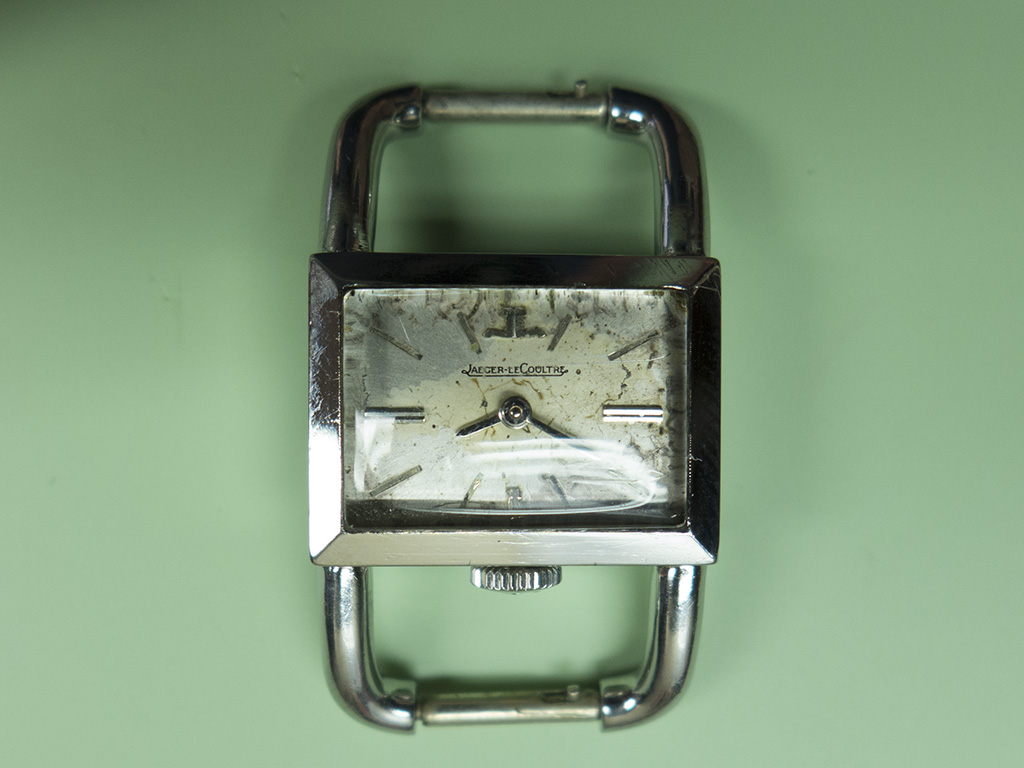
Jaeger-le-Coultre spruce up
This charming little ladies Jaeger-le-Coultre Etrier came in for a new crystal and a dial refinish as the ravages of time had taken their toll.
Seiko 4006-7000 Bell-Matic
Seikos Bell-Matics are fun watches and have quite a following, there are a huge variety of models to choose from and prices are still sensible at the moment. The example featured below came in for a movement service and the first thing you can spot is there’s obviously a problem with the day changeover as the wheel is stuck between two days. This is usually caused by a broken or bent day jumper, the component that locks the wheel into the correct position when it rolls over to the next day.

Seiko 6139-6002
Watches that have a connection to space missions are always popular with collectors, the most obvious being Omegas Speedmaster which back in the 1960’s came first in trials to become the official watch used for space flight by NASA. Seikos 6139-6002 also has a part to play in the space mission story as commander William R Pogue wore his example during his eighty-four day Skylab mission between November 16 1973 and February 8 1974. Although he was not officially sanctioned to do so, Pogue wore the watch during his duration on Skylab. He travelled around the Earth 1214 times for a total of thirty-four million miles with the watch on his wrist. He also used the watch during pre-flight training to time the engine burns. Seikos 6139-600x chronograph has now become better known as the “Pogue” for the above reason.

Omega SM300
Scuba diving became a huge leisure pursuit in the 1950’s and watch manufacturers were quick to offer timepieces designed to suit the activity. In 1953 Blancpain introduced the blueprint for future dive watches with it’s rotating “time elapsed” bezel, luminous dial and hands and screw down crown . Rolex were quick to follow in 1954 with their Submariner model and various other manufacturers followed suit soon after. In 1957 Omega debuted their offering the Seamaster 300 reference CK2913, along with it’s brothers the Railmaster and Speedmaster. The first generation Seamaster 300’s looked very distinctive with their broadarrow hands and narrow acrylic bezel.

 The Watch Bloke