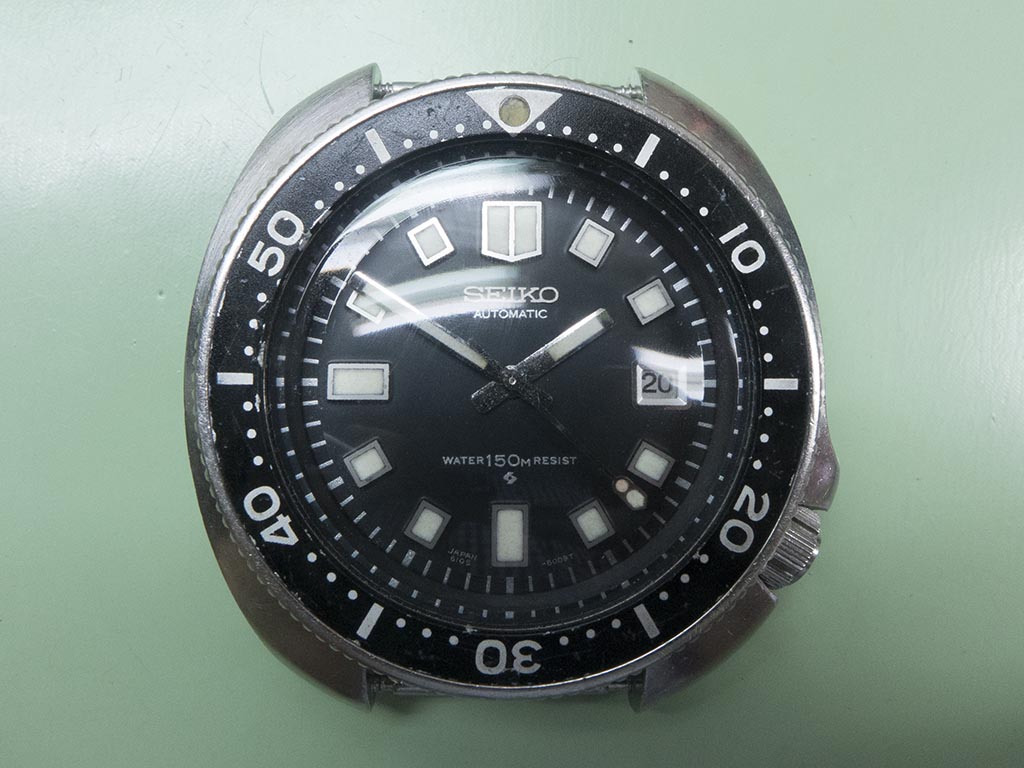
There’s not much more I can say about the 6105-8110 that I haven’t said already, but it’s always worth featuring one if I have the time! This example from March 1974 came in for a service recently.
Vintage
Poljot 3133 Chronograph
The Poljot Calibre 3133 is a 23 jewel, 21,600bph, cam controlled, manual wind chronograph with a coulisse lever system. It has running seconds at the 9 o’clock sub register, minutes elapsed at 3 o’clock and a central sweep seconds counter, it also has a date a 6 o’clock. In the 1970s, the Russian Poljot factory purchased the machinery to produce the 3133 from the Swiss firm Valjoux , at that time they were disposing of the machinery that once produced their chronograph caliber 7734. Poljot then used this to produce the 31mm calibre 3133. A good proportion of the parts of the Poljot 3133 are identical to the Valjoux 7734. The main differences between the two calibres are that the Poljot has all chronograph related gears running in jewels, and the glucydur balance swings in a Poljot developed shock protection system. The balance was modified to a smaller diameter which makes the 3133 run at 21,600bph compared to the 7734’s 18.000bph. This example has an inner 12 hour bezel that can be rotated by the crown on the left of the case and it came in for attention in a non running state.

Seiko 6306-7001
I’ve written about these JDM 6306 dive watches before but it’s worth a revisit just to showcase what beautiful condition this example from 1978 is in. It came in recently from a well known Seiko enthusiast for a movement service and a pressure test. It’s in outstanding cosmetic condition for a 37 year old wristwatch, the only negative points were the reason it came in, it needed a service! The amplitude was low and positional variation and beat error were a little high.

Longines calibre 30L
This lovely gold Longines arrived recently for a touch of conservation and a full movement service. It dates from the early 1960’s and is powered by the Longines calibre 30L, which was available in a number of different grades. The 30L was the undecorated version, the higher grade the grade the more elaborate the decoration was (on both sides of the calibre) and they also utilised larger balance wheels. The top grade was the calibre 30Z which was used successfully in Observatory Chronometer testing.

Bulova calibre 11
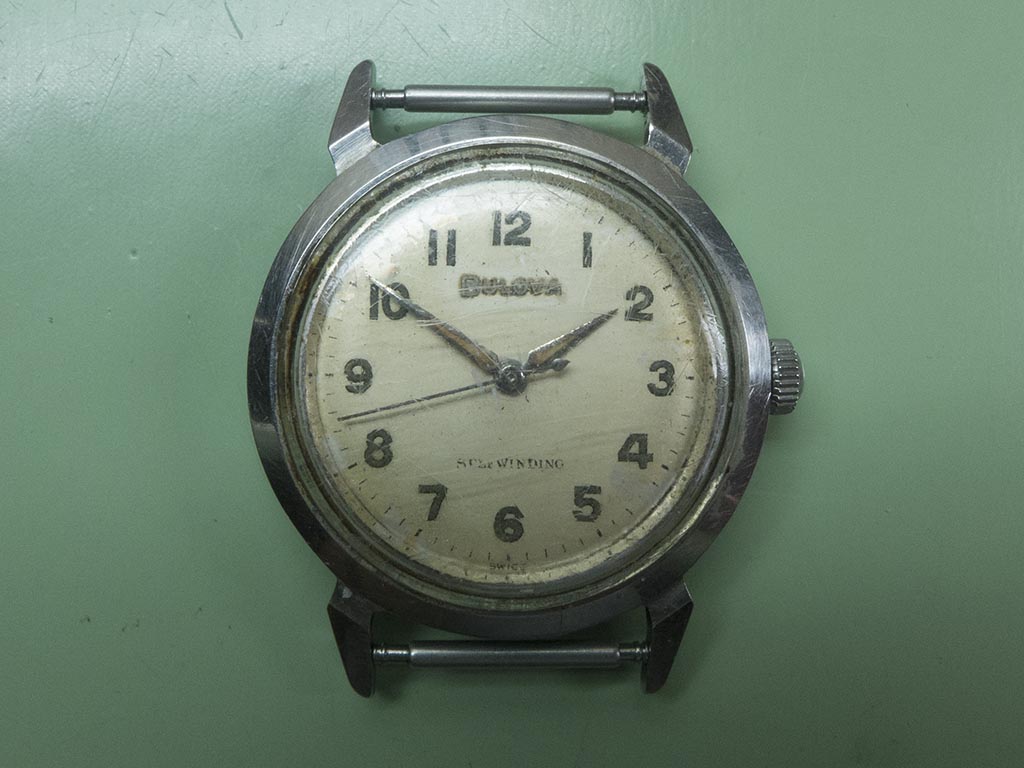
This little calibre 11 Bulova came in for service recently. Bulova have been manufacturing watches since beginning of the 20th century but the founder actually opened his Jewellery shop for business in 1875 in Maiden lane New York City. Bulova have always been at the forefront of precision and technical development, and are best known for their Accutron range of watches that used a tuning fork instead of the balance wheel as the timekeeping element. The Accutron was released in 1960 and was the worlds first electronic wristwatch. Bulova also has a long history with NASA and provided timekeeping clocks and mechanisms for many space craft including the Apollo missions. Another little known fact is that Bulova produced the first official Radio advert to be broadcast in 1926 and the first official television advert to be broadcast in 1941. Back to the featured watch and as can be seen it’s a little three handed gents watch powered by a 17 jewel, automatic, 18,000bph movement.
Seiko 5126-6010 JDM
The Seiko 5126-6010 is an unusual watch for a number of reasons. To begin with it’s a Japanese domestic market model which means exactly what it says, it was designed and produced for the Japanese domestic market! Seiko had some much funkier designs for their home market than they did for the rest of the world and this model featured is no exception with its cushion case, orange dial and inner rotating ring. The orange versions of these models remind me of Doxas Sharkhunter, probably no coincidence considering the original orange dialed Sharkhunter was introduced in the 1960’s and Seikos 5126-6010’s date from the late 1960’s. Another unusual feature of this watch is the calibre 5126 movement. It’s an automatic winding, 23 jewel, 19,800bph movement with a day date complication. These weren’t produced for very long and consequently you don’t see them very often these days. The movement architecture is quite a departure from what Seiko was utilising in their other calibres, notably there’s no pawl and transmission wheel autowind components, and the keyless work looks quite different too. This calibre has more in common with the Swiss method of using reverser wheels to convert the rotors movement into winding the mainspring. As you can see from the picture below this model was part of their “Sports” range, watches that were part of that range had their water resistance upped to 70m depth. Interestingly this model was also given the “5” designation. “Seiko 5” has these days become a symbol of their lower range value for money watches but when the “5” designation was introduced in the 1960’s it was a symbol of Seikos rugged, dependable and unique watches which was meant to represent 5 different selling points, automatic winding, day and date displayed in a single window, water resistance, a recessed crown at the 4 o’clock position and a durable case and bracelet. It’s nice to see that this example still has it’s original signed “Razor” bracelet that’s sized for a European wrist.

Tag Heuer diver 980.023
This Tag Heuer came in recently and had me scratching my head as to what was actually causing the stopping fault with it! The watch is powered by the ETA 963.116 quartz movement and the usual problem with these movements when they get to this age is either dirt stopping the train or the circuit or coil is dead. However, this one had been fitted with a NOS circuit/coil assembly but still wasn’t running correctly. It arrived from the relumers hence there were no hands fitted.

Seiko 6138-3002 chronograph
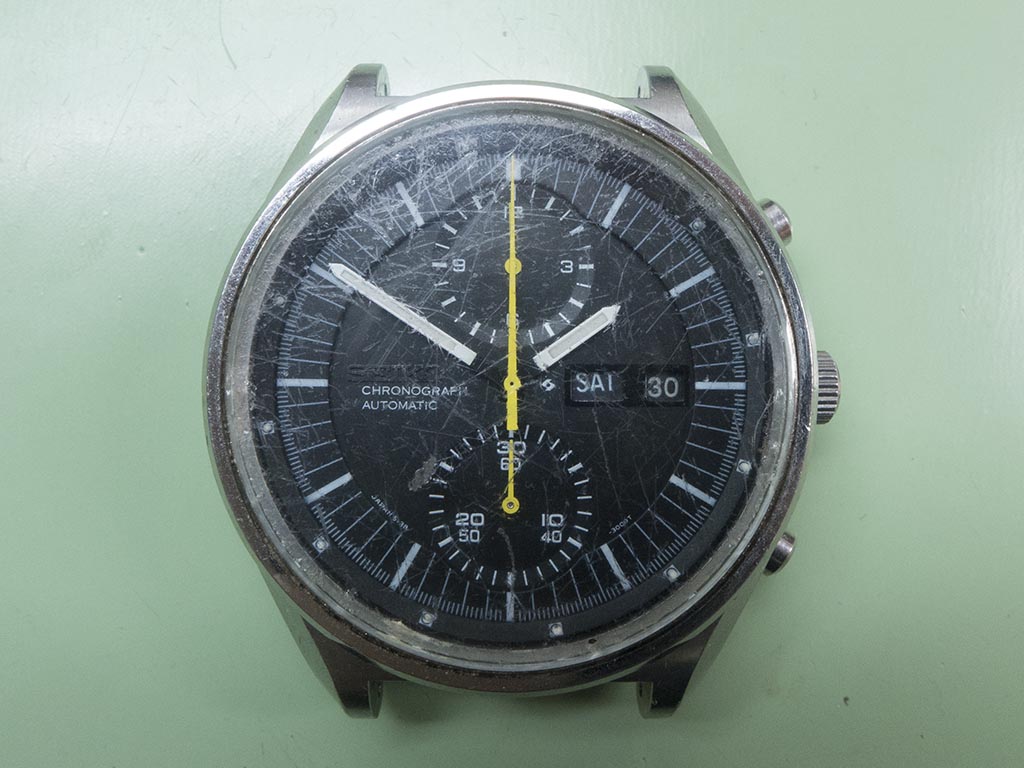
Seiko is well known for getting their 6139 chronograph to market in February 1969, the first automatic chronograph available to the public at that time. The story goes they wanted to release the twin register 6138 first, but because of the extra layer of components for the hour recording wheel it’s a more complicated watch than the single register 6139 and it wasn’t moving forward as fast as they’d like. Consequently they focused their energy on getting the 6139 to market to try and beat the two other contenders who were also developing automatic chronographs, namely Zenith-Movado group and a joint effort from Breitling, Hamilton/Bren, Heuer/Leonidas and Dubois-Dpraz. The arguments are still being done to death as to who actually was the first to market but my take is Seiko takes that accolade, your views may differ! This 6138-3002 came in for a full movement service as it wasn’t running correctly and a new crystal.
Omega Seamaster
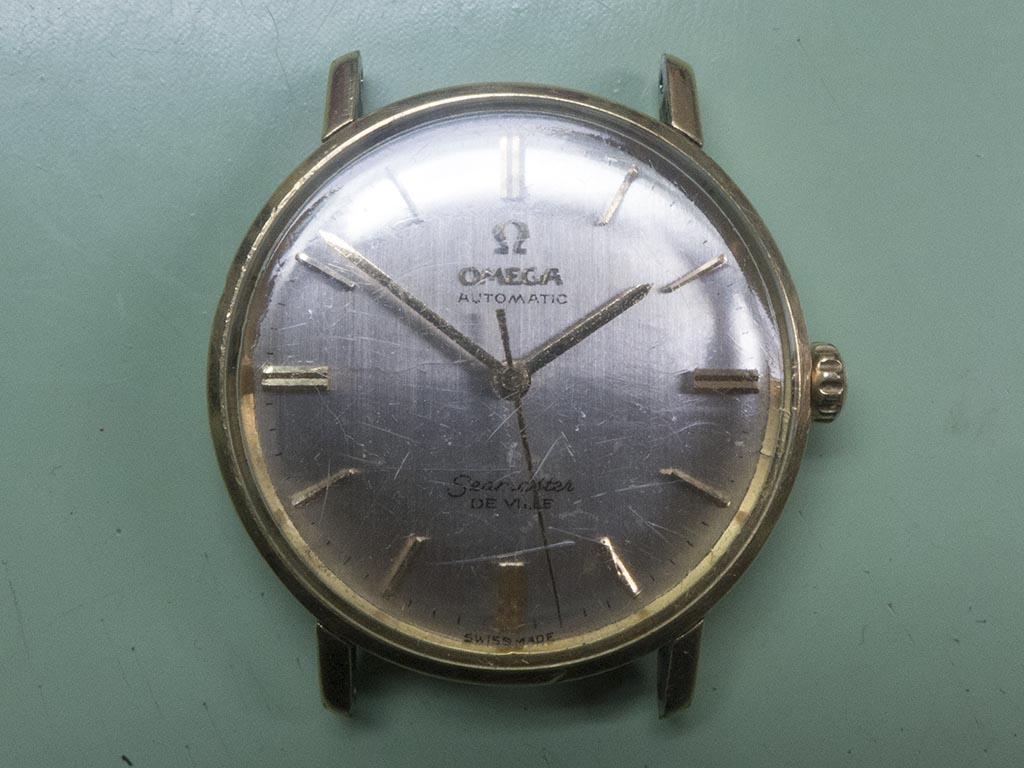
I’ve written a little about the Seamasters history in previous posts and here’s another one for your delight! This “De Ville” example from about 1964 has a stainless steel “Unicase” case with gold capped lugs and a gold bezel and crown. It has a lovely linen type dial with applied gold indicies and gold baton hands.
Seiko 6206-8040 Business
During the 1960’s a lot of different Seiko models carried the “Business” or “Business A” logo. This branding appealed to Seikos marketing department for a short period and seemed to be aimed at the Japanese salary man. He could proudly wear his new Seiko to work knowing it was designed for “business” people! The example featured is powered by the calibre 6206B, an automatic wind, 18,000bph, 26 jewel day/date movement. As I’ve mentioned before the 62xx series powered a vast range of Seikos models from divers to Grand Seikos. This one came in for a service and to sort out the common problem of the crown jumping whilst setting the day, date or time. As can be seen these models are a handsome watch which wear a lot bigger than they actually are due to the slim bezel making the dial look huge. A feature I particularly like about these is the full day window, these were typically positioned at 6 or 9 0’clock on the dial. The sunburst finish of the dial is also a nice touch.

 The Watch Bloke