And yet another 62mas is featured today, but not any old 62mas – this is a rather special one. I picked up the watch a while ago and it has been sitting in the project drawer for some time now whilst I a) decided what to do with it, and b) actually arranged my schedule so I could get on with it. As you can see the watch wasn’t in too bad a condition when it arrived, it was minus an insert but complete. A yobokies insert was purchased and that was fitted before this shot was taken.
Vintage

Seiko 6217-8001
Another 6217-8001 is featured today, I can’t resist them! This example was purchased new in 1966 by the current owners father who was then a seafaring man and a bit of a character by all accounts.

Seiko 6306 Scubapro 450
The Scubapro 450 is based on Seikos 6306-7001 model, and were produced in the late 1970’s as part of a marketing contract in conjunction with the Scuba-pro dive equipment company. The model it’s based on is a Japanese domestic market watch produced alongside the very similar 6309-7040. The difference between the calibre 6306 and 6309 is the 6306 has a kanji day wheel, has four extra jewels, it has a hacking mechanism and has different machining around the crown making the opening slightly larger. The difference between the Scubapro 450 and a stock 6306 is just the printing on the dial. The most obvious difference is the “Scubapro 450” script situated above the “Water 150 Resist” on the dial, but a harder to see change is the dial code went from 700L T to 700J T. It’s generally accepted that the Scubapro versions were produced between 1978 and 1979 but to muddy the waters examples have surfaced with caseback dates of 1976, 77, and 83. Were these actually produced in those years or have the casebacks been changed? The 1983 example is doubly strange because that one post dates 6306’s end of production date of 1981! As ever with vintage Seiko nothing is clear cut – part of the appeal maybe? The example featured below is in outstanding condition and belongs to a very knowledgeable UK collector. It came in for a full movement service so I seized the chance to document it!

Cyma Navystar
This little Cyma Navystar came in for a bit of TLC recently. The Navystar range was introduced in the 1950’s and encompassed many different designs and movements, the common theme being it was a rugged waterproof watch in a slim case. There were over 20 patented technological innovations introduced to allow these timepieces to function under particularly demanding circumstances. The Cymaflex logo at the botttom of the dial refers to the patented anti shock system used on the balance staff.

Seiko 6105-8110
Every now and then I get a watch in that seems to fight me at every turn, and this particular 6105 is one of those watches! It arrived looking a little worse for wear, the lume was starting to degrade on the dial and the handset was well advanced with the rot. It had an aftermarket insert fitted but didn’t actually look to bad at first sight.

Seiko 6217-8001
Regular readers will know the 62 series calibres are my favourite vintage Seiko movements, you’ll also know the 62mas is my favourite vintage Seiko divers watch. Another one has been across the bench today so here’s a peek at what I had to contend with. The watch arrived to me after having a relume so the hands are in the little container. As you can see it’s a little scruffy with its scratched crystal but it has the basis of a good honest watch.

Universal Genève Polerouter Sub
Back in the mid fifties Universal Genève provided Scandinavian Airline crews with precision wristwatches incorporating strong antimagnetic capabilities when the airline opened their new European to California routes that cut 1,000 kilometers off the Journey. These routes were the first that actually crossed over the North pole hence the antimagnetic properties of the watches. The first commercial flight was made on 15th November 1954 and this was a huge event for Scandinavia at the time. On board the flight were the Prime Ministers of Denmark, Sweden and Norway as well as a group of prominent journalists, and there were reported crowds of over 10,000 people to witness the planes departure. Universal Genève introduced the Polerouter (or Polarouter as the model was then called) to mark this auspicious occasion. It was actually created and designed by Gerald Genta, and started life with the calibre 138 automatic movment with a centrally pivoted “bumper” rotor assembly. However, this was soon superceded by the calibre 215 automatic with its famous patented “microtor” movement. It was at this time the models name was changed to Polerouter. The example featured is a Polerouter Sub which is powered by the calibre 1-69 movement (with date) and was introduced in 1962, the calibre 69 was identical apart from having no date complication. This particular example was a non runner and the hands were locked in position, turning the crown to try and adjust them had no effect.

Seiko World Time
Seikos reference 6217-7000 World Time was introduced in 1964 to coincide with the Olympic games which were held in Tokyo that year. Seiko were chosen as the official timekeepers for the event, a very prestigious contract to be awarded. The watch was powered by the automatic, 17 jewel, 18,000bph, 6217a calibre which was actually a development of the 603 calibre which first appeared in 1960. The 62xx series of movements powered everything from the World Time to the Grand Seikos of the day. The World Time allows you to determine the time in any one of 24 time zones around the globe with the use of its rotatable inner bezel. Line up a city that’s in your current timezone with the 24 hour hand and you can reference the other timezones using the 24 hour scale. This example came in for a movement service and a bit of work to the bracelet. It’s unusual in a couple of respects, firstly it has the more uncommon brown dial and city ring (these were mostly produced with a sliver dial and city ring), and secondly it’s still on its original bracelet which you very rarely see. It always a pleasure to work on a watch which means a lot to the owner, this was his late fathers watch who bought it brand new back in the sixties.

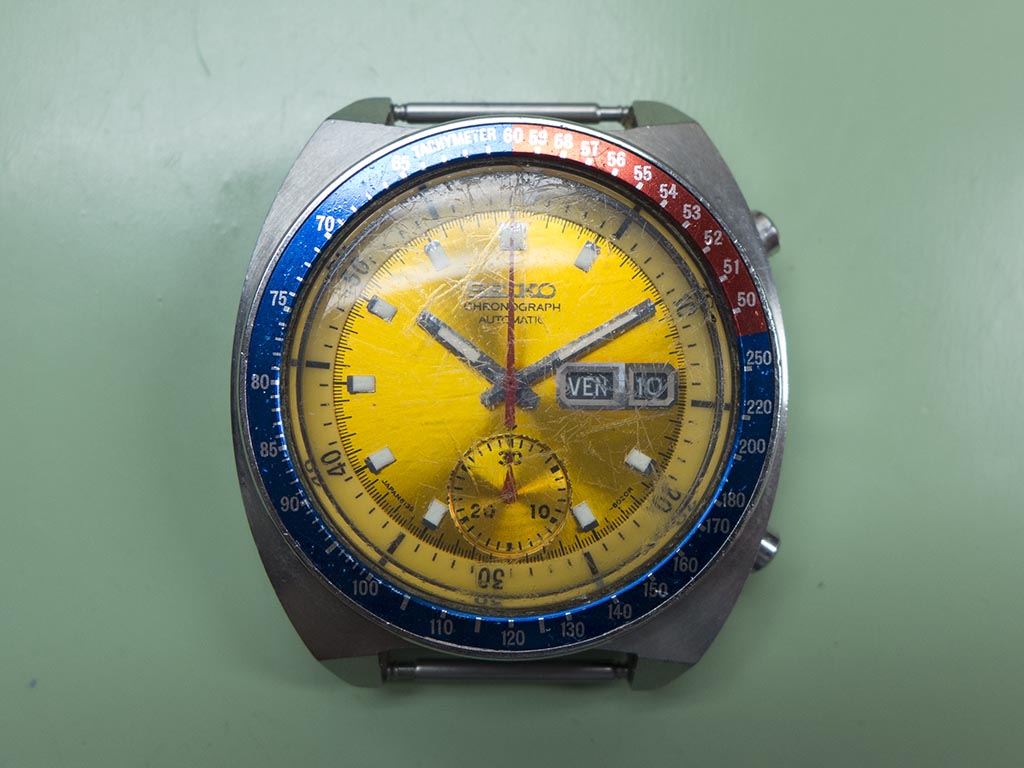
Another day, another Pogue….
I’ve had a number of these 6139-6002’s in recently, in fact last month I did a little piece on the history of them here. I thought I’d feature the latest one that’s been on the bench to illustrate the transformation a simple thing like a replacement crystal can bring to the watch. It came in for a new crystal and a full movement service. Under that crystal the dial and handset look to be in great shape with little damage and bright white lume, and thankfully no broken crown on this one.
Rolex 1603
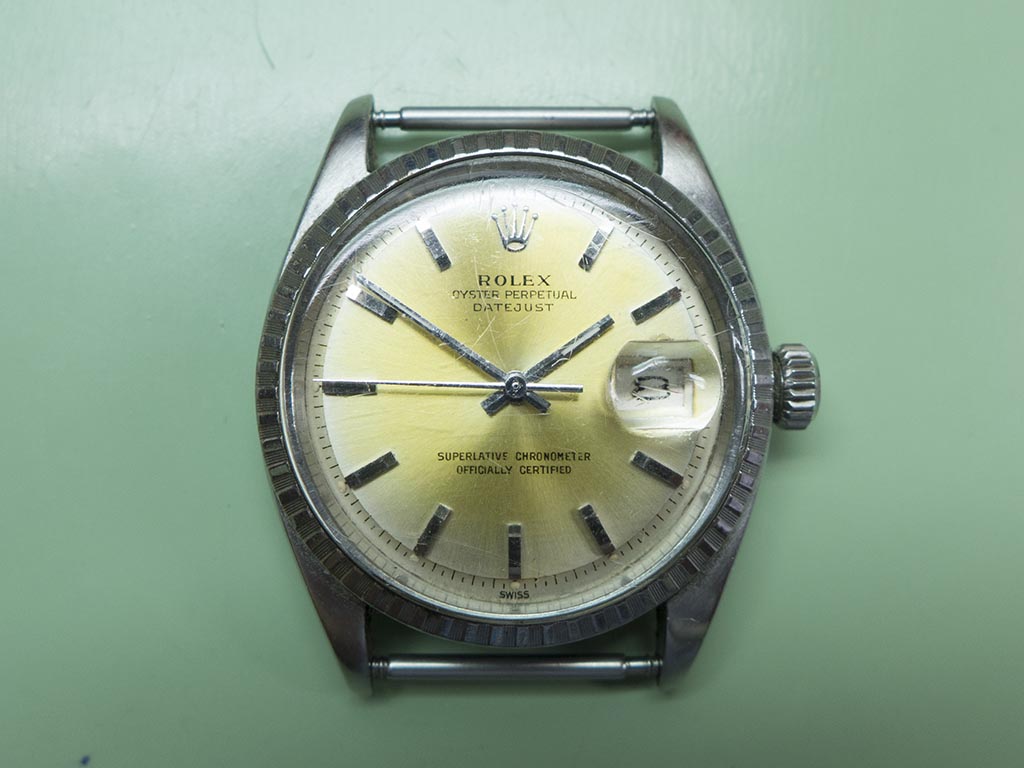
This lovely gold dialled Rolex reference 1603 came in with a low power reserve, when I tested it I got 28 hours from a full wind which is about 33% down on what you’d expect from a healthy 1560 calibre. A service and new mainspring should sort this out! The watch dates from 1961 according to the inside of the caseback and is in exactly the condition I love to see vintage watches in that have been used as intended and looked after.
 The Watch Bloke